





A denied car insurance claim in India can be financially devastating — particularly in the aftermath of an accident when repair costs can run into lakhs of rupees. Understanding why car insurance claims get denied and, more importantly, how to fix or challenge those denials can make the difference between recovering your losses and bearing them entirely. Here is a comprehensive breakdown of the most common denial reasons and the specific remedies available for each.
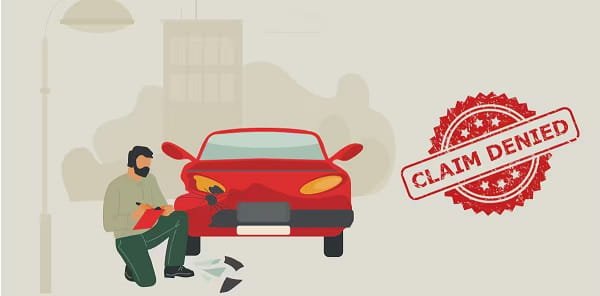
Most Common Car Insurance Claim Denial Reasons in India
1. Driving Without Valid Licence: The most common and most difficult-to-challenge car insurance denial occurs when the driver at the time of the accident did not hold a valid driving licence — either because the licence had expired, was for a different vehicle category, or was entirely absent. Indian Motor Vehicles Act and standard insurance policy conditions both require a valid licence as a fundamental condition of insurance coverage. Solution: always verify your driving licence validity before driving. If your licence expired and you drove unaware, present evidence of the expiry being very recent and your history of timely renewal. Insurers sometimes exercise discretion in borderline cases, particularly for very recent expiries.
2. Driving Under the Influence of Alcohol or Drugs: If a blood alcohol test or circumstantial evidence indicates that the driver was under the influence at the time of the accident, the insurer will deny the claim entirely. This applies to both own-damage claims and third-party claims under the own-damage portion. Third-party liability coverage under the mandatory Third-Party Insurance cannot be denied even in drunk driving cases — but the insurer may seek reimbursement (subrogation) from the policyholder after paying the third party.
3. Policy Exclusions: Every comprehensive car insurance policy has specific exclusions. Common exclusions include damage caused by war or nuclear risk, consequential losses (engine damage from driving through waterlogged roads if not covered under the add-on), mechanical or electrical breakdown unrelated to an accident, damage while the vehicle was used for hire or reward when insured as a private vehicle, and damage outside the geographic coverage area.
Engine protection, zero depreciation, and return to invoice are typically add-on covers rather than standard inclusions — claims for these specific covers without the corresponding add-on will be denied. Solution: thoroughly review your policy inclusions and add-ons annually at renewal and add relevant covers based on your driving patterns.
4. Delayed Claim Intimation: Most car insurance policies require claim intimation to the insurer within 24–48 hours of an accident. Excessive delays in reporting can give insurers grounds to deny claims, arguing that the delay prevented proper investigation and evidence collection. If you were hospitalised following the accident and could not report promptly, medical records demonstrating your incapacity can constitute a valid explanation for delayed intimation. Always intimate claims at the earliest opportunity regardless of whether you have decided to pursue the claim.
5. Mismatch in Insured Vehicle Details: If the vehicle modification was made after policy issuance without informing the insurer — engine modification, CNG kit installation, body modification — the insurer may deny claims arguing the insured vehicle does not match the policy description. CNG kit installation, in particular, requires both an RTO endorsement and an insurer endorsement to maintain valid coverage.
6. Vehicle Used Outside Permitted Purpose: A private car used for commercial purposes — as a taxi, for goods transport, or in an organised ride-sharing arrangement — will have its claims denied because the risk profile changed materially from what was insured. Separate commercial vehicle insurance is required for such use.
7. Fraudulent Claims: Staged accidents, inflated repair estimates, or misrepresentation of accident circumstances constitute insurance fraud. Insurers employ survey investigators who can identify suspicious claim patterns. Beyond denial, fraudulent claims can result in policy cancellation and legal action.
How to Challenge a Denied Car Insurance Claim
Step 1 — Obtain Written Denial with Policy Clause Reference Request the complete written denial letter from your insurer specifying the exact policy clause and factual basis for denial. This is your right under IRDAI regulations and is essential for any subsequent challenge.
Step 2 — Gather Counter-Evidence Build your counter-case systematically. Collect the FIR copy from the police station, photographs from the accident scene, witness statements, independent surveyor assessment, vehicle inspection reports, and any other evidence that contradicts the insurer’s stated denial reason.
Step 3 — File a Formal Grievance Submit a written grievance to the insurer’s Grievance Redressal Officer with your counter-evidence clearly addressing each stated denial reason. Request reconsideration within 15 days. For surveyor disputes — where the insurer’s surveyor significantly undervalued damage — you can request appointment of an independent surveyor under IRDAI guidelines.
Step 4 — Insurance Ombudsman For denied claims up to ₹50 lakhs, the Insurance Ombudsman provides the most effective and fastest free dispute resolution. File at the appropriate regional Ombudsman office with complete documentation. The Ombudsman can direct reinstatement of the claim and award interest for delay.
Step 5 — Consumer Forum or Motor Accidents Claims Tribunal For third-party claims, the Motor Accidents Claims Tribunal (MACT) is the specialised legal forum. For own-damage claim denials, the Consumer Forum can order payment plus compensation. Both options involve legal process and may require professional assistance.
Preventive Measures to Avoid Car Insurance Claim Denial
Always carry a valid driving licence and verify its expiry date annually. Intimate all vehicle modifications to your insurer immediately. Renew your policy without any lapse gaps. Document accident scenes thoroughly with photographs before moving vehicles. Always file an FIR for accidents involving injuries or significant damage.
FAQs
Q: Can an insurer deny a claim because I did not have a valid PUC certificate?
A: Denial solely on PUC certificate grounds is generally not upheld by Consumer Forums — it is a regulatory violation but not directly connected to the insurance coverage conditions.
Q: My insurer’s surveyor assessed repair costs at half the actual cost — what can I do?
A: Request appointment of an independent surveyor under IRDAI regulations, or file a grievance challenging the survey assessment with independent repair estimates from authorised service centres.
Q: Is third-party insurance claim denial possible?
A: Third-party liability claims cannot generally be denied for the third party’s benefit — though the insurer may subsequently recover from a policyholder who violated policy conditions.