



KYC — Know Your Customer — is the mandatory regulatory gateway to mutual fund investing in India, and a KYC not approved status is one of the most frustrating barriers that prevents genuine investors from starting or continuing their investment journey. Unlike a demat account where KYC is maintained at the DP level, mutual fund KYC in India operates through a centralised KRA — KYC Registration Agency — system managed by SEBI-registered entities including CAMS KRA, Karvy KRA (KFintech), CVL KRA, NSE KRA, and NDML. Once KYC is approved through any one KRA, it is valid across all mutual funds in India — making the approval critically important. This guide covers every reason for KYC non-approval and its specific solution.
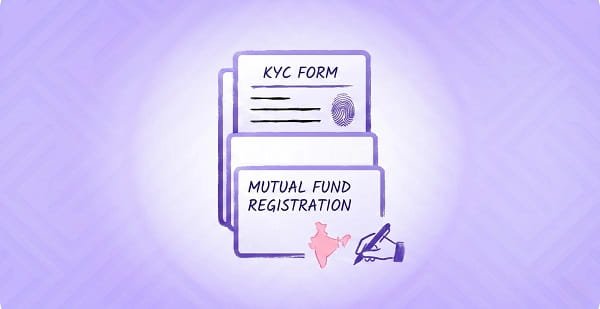
Understanding the Mutual Fund KYC System
The mutual fund KYC process requires you to submit identity proof, address proof, a photograph, and your signature for verification against your PAN and Aadhaar records. The KRA verifies this information through a combination of automated checks against government databases and manual document review. Your KYC status can be Registered, Verified, Validated, or Rejected — and only Verified or Validated status allows full mutual fund transaction capability. KYC Registered status means your application is submitted but not yet approved — a temporary state. KYC Rejected means a specific issue was found that requires correction and resubmission.
Reason 1 — Document Quality Issues
Poor quality document images are the most frequent cause of KYC processing delays and rejections. Common issues include blurry or pixelated photographs of PAN cards, Aadhaar documents, or address proofs where text is illegible; documents with partially cut-off edges where important information is not fully visible; laminated documents photographed with glare obscuring details; and signature images with insufficient contrast against the background.
Solution: retake all document photographs in bright natural or artificial light, flat on a clean surface without shadows or glare. Ensure all four corners of the document are visible, all text is sharply legible, and the image file size is within the platform’s specified limits. Use a dark-coloured pen on pure white paper for your signature image.
Reason 2 — PAN-Aadhaar Name Mismatch
If the name on your PAN card differs from the name on your Aadhaar — a common situation due to spelling variations, full name versus initials differences, or name changes after marriage — the automated KYC verification system flags the mismatch and either delays or rejects the KYC.
Solution: the ideal resolution is updating one document to match the other — either updating your PAN name through the NSDL portal or updating your Aadhaar name through the UIDAI portal. If the mismatch is minor — a spelling variation that does not genuinely represent a different person — submit a self-declaration letter explaining the variation along with your KYC documents. Most KRAs accept such declarations for minor name discrepancies.
Reason 3 — Aadhaar OTP Verification Failure
Online KYC through Aadhaar-based e-KYC requires your mobile number to be linked to your Aadhaar for OTP delivery. If your mobile number is not linked to Aadhaar, the e-KYC process cannot be completed through the online route. The UIDAI OTP system also occasionally experiences technical delays during high-traffic periods.
Solution: verify whether your mobile number is linked to Aadhaar through the UIDAI website or mAadhaar app. If not linked, visit an Aadhaar Seva Kendra to link your current mobile number. Allow 72 hours for the linkage to reflect in the UIDAI system before attempting KYC again. If your Aadhaar mobile link is active but OTP is not arriving, retry during off-peak hours or switch to the offline KYC route.
Reason 4 — In-Person Verification Not Completed
For full KYC with higher transaction limits, IPV (In-Person Verification) is required — either through a video-based process or physical verification at a KRA office or authorised branch. Many investors complete the document submission part of KYC but skip or fail the IPV step, resulting in KYC Registered status without full Verified status.
Solution: complete the video IPV through the mutual fund platform, AMC app, or KRA’s digital KYC portal. The IPV involves a 30–60 second video where you clearly display your PAN card and speak your name and date of birth. Ensure good lighting, clear audio, and stable internet during the recording. Alternatively, visit the nearest Registrar office — CAMS or KFintech — for in-person verification with original documents.
Reason 5 — KYC Submitted Through One Platform Not Reflecting on Another
Some investors complete KYC through one specific mutual fund platform and then find their KYC status shows as pending or not found when they try to invest through a different AMC or platform. This typically occurs because the KYC was processed through a platform-specific shortcut rather than through the centralised KRA system.
Solution: check your KYC status on the CVL KRA website by entering your PAN. If your KYC is not found on the KRA database — regardless of what a specific platform shows — your KYC needs to be registered through the KRA system. Use the CAMS KRA or KFintech portal to initiate a fresh full KYC registration that flows into the central database.
Step-by-Step Resolution Process
Step 1: Check your current KYC status at cvlkra.com or camskra.com by entering your PAN. Note the exact status and any reason code provided for non-approval.
Step 2: Identify the specific rejection or pending reason from the status check. This directs your entire resolution effort.
Step 3: Correct the identified issue — whether document quality, name mismatch, mobile linking, or IPV completion.
Step 4: Resubmit the corrected KYC through your AMC’s platform, a mutual fund distributor, or the KRA’s direct online portal.
Step 5: Allow 3–5 working days for processing and recheck the KRA status. Follow up with the AMC or KRA customer service if the status has not updated within this period.
Frequently Asked Questions
Q: Is one KYC approval valid for investing across all mutual fund houses in India?
A: Yes — KYC approval through any SEBI-registered KRA is valid across all AMCs and mutual fund platforms in India without separate re-KYC.
Q: Can I invest in mutual funds while my KYC is pending?
A: Some platforms allow limited investment with KYC Registered status pending verification. Full transaction capabilities — including higher investment amounts and redemptions — typically require full KYC Verified status.
Q: My KYC was approved years ago but now shows as pending — why?
A: Periodic KYC refresh requirements from SEBI may have flagged your existing KYC for update. Complete the re-KYC process through your AMC or KRA portal.