





Receiving a loan approval letter is an exciting milestone — it signals that the lender has assessed your creditworthiness and confirmed your eligibility. However, loan approval and loan disbursement are two distinct stages in the lending process, and a significant number of approved loans never reach disbursement due to issues that arise between these two stages. If your loan has been sanctioned but the funds have not been credited to your account, understanding the specific reasons and their resolutions can prevent unnecessary delays and protect your financial planning.
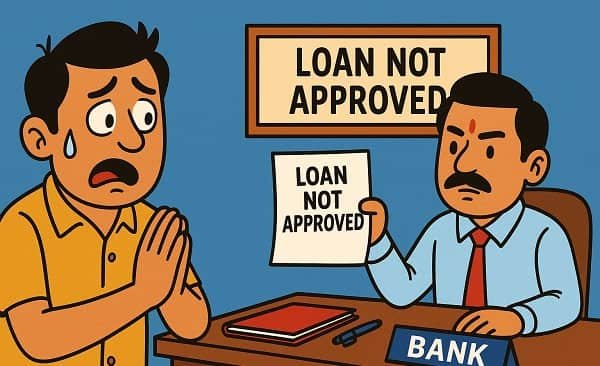
Understanding the Difference Between Sanction and Disbursement
A loan sanction letter confirms that the bank is willing to extend credit based on the information provided during application. Disbursement is the actual transfer of funds to your account or directly to a third party such as a property developer or vehicle dealer. The period between sanction and disbursement involves additional verification steps, documentation completion, and compliance checks that can reveal issues not visible during the initial application stage.
Reason 1 — Incomplete or Pending Documentation
The most common reason for disbursement delay or stoppage is incomplete documentation. During the sanction stage, some documents may have been provisionally accepted pending final verification or submission of originals. Common pending documents include original property papers for home loans, notarised agreements, encumbrance certificates, property tax receipts, registered sale agreements, employer verification letters, and legally authenticated income proof documents. If any required document is missing from the complete disbursement checklist, the bank will hold disbursement until the full set is received and verified.
Solution: request a complete disbursement checklist from your loan officer immediately after sanction. Prepare every document on the list before the disbursal appointment rather than addressing gaps reactively. For property-related documents, engage a property lawyer early to ensure all title documents, NOCs, and registration papers are in order.
Reason 2 — Property Legal or Technical Issues for Home Loans
For home loans specifically, disbursement involves a detailed legal and technical appraisal of the property being purchased — a process separate from the personal eligibility assessment that drove the sanction. The bank’s empanelled lawyer reviews the complete chain of title documents, while the technical team visits the property to verify construction progress, approved plan compliance, and structural quality. Common issues include unclear property title, unpaid dues on the property, deviations from the sanctioned building plan, disputed ownership, encroachments on the property, or the property being in a legally restricted zone.
Solution: engage an independent property lawyer to conduct a parallel title search before applying for the home loan. Address any title defects, obtain required NOCs from housing societies or development authorities, and verify that the property’s construction conforms to the municipal corporation’s approved plan. Resolving property issues proactively before submitting documents for disbursement saves significant time.
Reason 3 — Change in Employment Status After Sanction
Banks verify employment status at multiple points — during application, at sanction, and sometimes immediately before disbursement. If you changed jobs, resigned, or were retrenched between sanction and disbursement, the bank will suspend disbursement pending fresh income verification. Even a voluntary job change to a higher-paying position can trigger a reassessment if the new employer is not on the bank’s approved list or if the required minimum tenure with the new employer has not been met.
Solution: avoid any employment change during the period between loan sanction and disbursement. If a change is unavoidable, inform your bank immediately and provide comprehensive documentation of your new employment including appointment letter, salary slip, and bank statement credits from the new employer.
Reason 4 — Deterioration in Credit Profile Post-Sanction
Banks sometimes pull a second credit report immediately before disbursement. If your credit score declined significantly after sanction — due to new loans taken, missed payments on existing obligations, or a high credit card balance — the bank may suspend disbursement for reassessment. Similarly, if a large new liability appears on your credit report between sanction and disbursement, the bank may recalculate your FOIR and find it no longer within acceptable limits.
Solution: avoid taking any new credit, making large purchases on credit cards, or missing any payment between loan sanction and disbursement. Maintain your financial profile in exactly the condition it was at sanction until funds are credited.
Reason 5 — Regulatory or Internal Bank Issues
Banks occasionally face internal compliance audits, regulatory directives from RBI, or internal credit policy revisions that cause disbursement holds on sanctioned loans. These are systemic rather than personal issues and are typically resolved within days to weeks.
Solution: contact your loan officer directly for status updates. Escalate to the branch manager if communication is unresponsive. If a sanctioned loan is not disbursed within the validity period of the sanction letter — typically 3–6 months — request a sanction letter renewal before expiry.
Reason 6 — Third-Party Confirmation Pending
For vehicle loans, the disbursal is made to the dealership rather than to you directly — disbursement requires confirmation of vehicle availability, finalization of the purchase invoice, and RC transfer arrangements. For home loans in under-construction properties, disbursement is staged based on construction milestones confirmed by the builder and verified by the bank. If the builder fails to provide the required demand letter or construction progress certificate for the next disbursement tranche, the bank holds the corresponding payment.
Solution: coordinate actively between the bank, builder or dealer, and yourself. Maintain a dedicated communication track with the builder’s accounts team and the bank’s home loan processing centre.
Frequently Asked Questions
Q: Can a bank cancel a sanctioned loan before disbursement?
A: Yes — sanction letters contain conditions that must be met before disbursement. Failure to meet any condition can result in cancellation of the sanction.
Q: How long is a home loan sanction letter typically valid?
A: Most banks provide a 3–6 month validity period for sanction letters. Request renewal before expiry if disbursement is delayed beyond this period.
Q: Can I complain to RBI if my sanctioned loan is not disbursed without reason?
A: Yes — unexplained disbursement refusal after sanction can be raised as a grievance with the bank’s GRO and escalated to the Banking Ombudsman if unresolved.