



An insurance policy lapse is one of the most financially damaging situations a policyholder can face — a moment when the protective cover you have been paying premiums for suddenly ceases to exist, often at the worst possible time. Understanding exactly what happens when your policy lapses, what rights you retain, and how to reactivate your coverage is essential knowledge for every insurance policyholder in India.
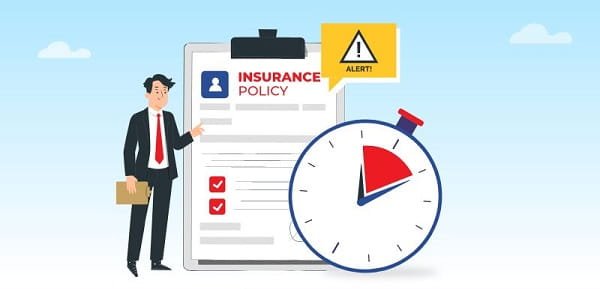
What is a Policy Lapse?
An insurance policy lapses when the policyholder fails to pay the due premium within the grace period provided by the insurer. The grace period is the window after the premium due date during which the policy remains active and claims are honoured even though payment has not yet been received. For life insurance policies, the standard grace period in India is 30 days for annual, half-yearly, and quarterly premium payment modes, and 15 days for monthly premium modes. For health insurance policies, a grace period of 30 days is typically provided for renewal. Once this grace period expires without premium payment, the policy officially lapses.
It is important to distinguish between a lapse and a simple delay — during the grace period, your coverage continues fully. Only after the grace period expires does the policy status change to lapsed, and coverage terminates from the premium due date, not the grace period end date.
What Happens When Your Insurance Policy Lapses?
The consequences of a policy lapse vary significantly depending on the type of insurance.
Life Insurance Lapse Consequences: When a term life insurance policy lapses, coverage ceases immediately after the grace period — meaning if the insured person dies during the lapsed period, the death claim will be rejected entirely. For traditional endowment or money-back policies, lapse consequences depend on whether the policy has acquired a paid-up value — typically after three years of premium payment. A policy with paid-up value does not fully lapse but converts to a reduced paid-up policy with a proportionally reduced sum assured. For ULIPs (Unit Linked Insurance Plans), the fund value continues to exist but mortality and other charges continue to be deducted from the fund, gradually depleting it.
Health Insurance Lapse Consequences: Health insurance lapse is particularly consequential because it can reset waiting periods. When a health insurance policy lapses and is subsequently renewed after the grace period, the insurer may treat it as a fresh policy — meaning the waiting period for pre-existing diseases (typically 2–4 years), specific illness waiting periods, and the initial 30-day waiting period may all restart from the date of renewal. This is one of the most serious consequences of health insurance lapse, as it can leave you unprotected against the exact conditions you most need coverage for. Additionally, any no-claim bonus accumulated during the policy’s active period may be forfeited upon lapse.
Motor Insurance Lapse Consequences: Third-party motor insurance lapse carries legal risk — driving without valid third-party insurance is an offence under the Motor Vehicles Act, punishable with fines and potential imprisonment. Comprehensive policy lapse means any accident during the lapsed period results in complete uninsured financial exposure. A vehicle with lapsed motor insurance must undergo a fresh inspection before reinstatement, as insurers will not accept unverified claims about the vehicle’s pre-lapse condition.
How to Reactivate a Lapsed Insurance Policy
Reactivation During Grace Period: If you are still within the grace period, paying the overdue premium is all that is required. Coverage retroactively continues from the due date without any break or additional requirements.
Revival of Lapsed Life Insurance Policies: For life insurance policies lapsed beyond the grace period, the revival process — called reinstatement — typically requires paying all outstanding premiums with interest, and in some cases submitting a fresh medical examination or declaration of good health. IRDAI regulations require life insurers to offer a revival period of at least five consecutive years from the date of the first unpaid premium. During this window, the insurer cannot refuse revival without justification. Standard revival options include ordinary revival (paying all due premiums plus interest), special revival schemes (paying a lump sum with the insurer waiving some back premiums), and loan-cum-revival (using the policy’s loan value to clear arrears).
Revival of Lapsed Health Insurance Policies: Health insurance revival typically requires paying the overdue renewal premium with any applicable loading. Depending on how long the policy has lapsed, the insurer may require a fresh medical check-up and may apply new waiting periods. IRDAI has issued guidelines encouraging portability-like protections for genuine continuous coverage holders who lapsed due to temporary financial difficulty — specifically, insurers should give credit for waiting periods already served before the lapse for policies that are revived within 30 days of the grace period expiry.
Motor Insurance Revival: Lapsed motor insurance requires a fresh vehicle inspection by the insurer’s surveyor to assess the vehicle’s current condition before reinstatement. This prevents insuring a vehicle that has already suffered damage during the lapsed period. After inspection clearance, the policy is renewed — typically for a fresh one-year term. The premium may be adjusted based on the break in insurance history.
Preventing Policy Lapse
The most effective approach to policy lapse is prevention. Set up ECS or NACH mandates for automatic premium deduction from your bank account — virtually all insurers offer this facility at no extra charge. Register your mobile number and email address with your insurer to receive premium due reminders 30–60 days in advance. Note premium due dates in a dedicated financial calendar. If you are facing temporary financial difficulty, contact your insurer before the due date — many insurers offer instalment options or short-term deferral arrangements that can prevent formal lapse.
Frequently Asked Questions
Q: Does a lapsed term life insurance policy have any surrender value?
A: No — term policies have no surrender or paid-up value. Lapse means complete loss of coverage with no refund.
Q: Can the insurer reject my health insurance revival application?
A: Yes — particularly if your health status has significantly changed since the original policy was issued. The medical examination at revival may result in loading or exclusions.
Q: Does lapsing and reviving reset my no-claim bonus?
A: Typically yes — most insurers reset the no-claim bonus accumulation upon policy lapse beyond the grace period.
Q: Is there a maximum period within which a lapsed policy can be revived?
A: For life insurance, IRDAI mandates a minimum 5-year revival window. For health insurance, revival rules vary by insurer but most allow revival within 90–180 days without fresh underwriting.