


Tube Investments of India, the listed conglomerate behind BSA, Hercules, and Montra, carries a market capitalisation of roughly ₹52,000-60,000 crore, even though bicycles represent just one of its three core business verticals alongside engineering and metal-formed products. This ranking of the top 10 bicycle manufacturers in India 2026 covers that diversified giant alongside Hero Cycles’ still-dominant private volume, and the newer electric bicycle specialists racing to capture a segment analysts expect to grow at over 12% CAGR.
1. Hero Cycles
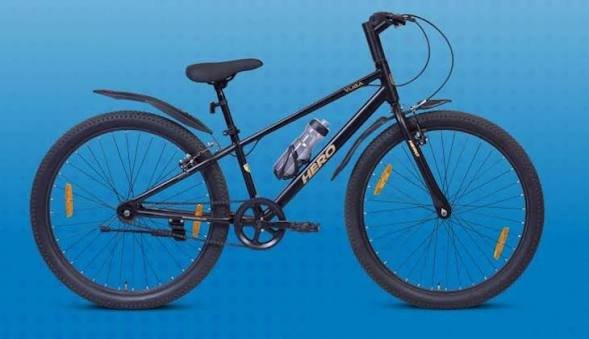
Hero Cycles holds an estimated 40% share of India’s bicycle market, making it the country’s largest manufacturer by volume, though the company itself remains unlisted, with its broader group exposure available to investors primarily through Hero MotoCorp’s separate stock. Hero MotoCorp has forayed into the electric bicycle business through Hero Lectro, introducing smart e-bikes with Bluetooth app connectivity, GPS tracking, anti-theft capabilities, and detachable batteries specifically designed to appeal to urban commuters.
That Hero Lectro push reflects the same broader industry recognition driving Tube Investments’ own e-bike investment, since the segment is projected to grow at over 12% CAGR, and Hero’s decision to extend its dominant conventional bicycle brand equity into electric models rather than launching an entirely separate identity suggests genuine confidence that its existing distribution network will convert directly into e-bike sales.
2. Tube Investments of India (TI Cycles)
Tube Investments of India carries a market capitalisation of roughly ₹52,132-60,718 crore, with consolidated revenue of ₹23,754 crore and profit of ₹1,109 crore, though bicycles represent just one of the company’s three core verticals alongside Engineering and Metal Formed Products. As part of the ₹1,056 billion Murugappa Group, TI Cycles manufactures under four flagship brands, BSA, Hercules, Montra, and Mach City, through 35+ manufacturing locations and a 1,200-strong direct dealer network, plus 175+ Track and Trail retail stores offering premium international brands.
The company has announced greenfield and brownfield expansions at its Bhopal and Nashik facilities targeting 30-40% capacity addition over the next two years, alongside continued investment in electric bicycles and last-mile mobility solutions through its Montra Electric brand. That capacity expansion, paired with TI’s genuinely diversified revenue base spanning steel tubes, transmission chains, and TMT bars beyond cycling alone, gives it considerably more financial resilience to absorb bicycle-segment competition from global brands and EV two-wheeler entrants than a pure-play cycle manufacturer would have.
3. Avon Cycles
Avon Cycles began in 1948 manufacturing cycle saddles and brakes before producing its first complete bicycle in 1951, and has since built out a portfolio exceeding 200 models spanning geared, ladies, mountain bike, roadster, and electric bicycle categories. The company distinguishes itself as the world’s only bicycle manufacturer performing full backward integration, producing its own components rather than relying on external suppliers, a structural advantage that gives it tighter control over both cost and quality across its entire product range.
That full backward integration genuinely differentiates Avon from Hero Cycles and TI Cycles, both of which rely more heavily on external component sourcing, positioning Avon to weather supply chain disruptions and input cost volatility somewhat better than competitors dependent on third-party parts manufacturers.
4. Atlas Cycles (Haryana)
Atlas Cycles carries a legacy dating back to 1951 and once ranked among the highest-volume bicycle producers globally, though the company has been genuinely losing ground in recent years according to multiple industry analyses, a decline distinct from the growth trajectories of Hero Cycles, TI Cycles, and Avon. Despite this recent erosion, Atlas remains recognised among the established key players in India’s bicycle market, alongside Hero Cycles, TI Cycles, Avon Cycles, and Firefox Bikes.
That declining trajectory makes Atlas a genuinely instructive counterpoint within this list, illustrating how even historically dominant Indian manufacturing brands can lose relevance without sustained investment in design innovation and distribution modernisation, the exact areas where TI Cycles and Hero Cycles have continued investing aggressively.
5. Firefox Bikes
Firefox Bikes, founded in Delhi in 2009, dramatically reshaped India’s cycling scene by introducing international-standard models to the domestic market, and was the largest brand in India’s premium cycles segment during 2013-2014 before being acquired by Hero Cycles. Operating through more than 100 franchisee outlets across India, the brand spans Full Suspension, Hardtail, BMX, Kids, and Hybrid categories, giving Hero Cycles genuine premium-segment reach beyond its own core mass-market brand identity.
That acquisition strategy, folding Firefox’s premium positioning under the Hero umbrella rather than competing against it independently, mirrors the broader consolidation pattern across India’s bicycle industry, where established volume leaders increasingly acquire specialist premium brands rather than building that positioning organically from scratch.
6. Hero Lectro
Hero Lectro operates as Hero MotoCorp’s dedicated electric bicycle brand, introducing smart e-bikes engineered specifically for city commuters with Bluetooth connectivity, GPS tracking, anti-theft features, and detachable battery packs. Industry analysts specifically flag Hero Lectro and TI Cycles as the two brands growing most aggressively within India’s booming electric bicycle segment, positioning both as the clearest beneficiaries of the sector’s projected 12%+ CAGR.
7. Ninety One (AlphaVector)
AlphaVector, based in Ahmedabad and founded in 2015, manufactures the Meraki, its flagship e-bike under the Ninety One brand, featuring what the company describes as world-class components and cutting-edge technology aimed at both experienced and novice riders. As a comparatively young, dedicated electric bicycle specialist rather than a legacy conventional cycle manufacturer extending into e-bikes, AlphaVector represents the newer generation of India’s bicycle industry building its identity around electric mobility from inception rather than as an add-on business line.
8. Kross Cycles
Kross Cycles has built a recognised position within India’s competitive bicycle manufacturing landscape, offering a range spanning mountain bikes, road bikes, and hybrid models that compete directly against Firefox and Hero’s premium offerings. The company’s continued relevance within this crowded segment reflects genuine product differentiation efforts necessary to stand out against both the established Hero-TI Cycles-Avon triumvirate and newer international entrants competing for the same premium-segment consumers.
9. Wardwizard Innovations & Mobility (Joy e-bike)
Wardwizard Innovations & Mobility, operating under the Joy e-bike brand, stands as a listed company specifically focused on electric two-wheelers, appearing alongside Tube Investments and Atlas Cycles among the notable publicly listed names in India’s broader cycle and electric mobility stock universe. That public listing gives investors direct equity exposure to the electric bicycle and two-wheeler growth story specifically, distinct from Hero Cycles’ unlisted status and TI Cycles’ broader diversified conglomerate structure.
10. La Sovereign
La Sovereign rounds out the established international brands competing in India’s premium cycling segment, catering specifically to advanced cyclists and buyers seeking professional-grade components alongside comparable competitors like Cannondale and Btwin. Its continued presence within India’s competitive landscape reflects genuine demand from the country’s growing premium and fitness-focused cycling segment, distinct from the mass-market volume battles playing out among Hero Cycles, TI Cycles, and Avon.
Frequently Asked Questions
Q1. Which company holds the largest share of India’s overall bicycle market?
A: Hero Cycles holds an estimated 40% market share, making it India’s largest bicycle manufacturer by volume, though it remains unlisted, while Tube Investments of India (TI Cycles) is the largest publicly listed pure-play bicycle business, carrying a market capitalisation of roughly ₹52,000-60,000 crore across its diversified business.
Q2. Why did Hero Cycles acquire Firefox Bikes instead of building a premium brand independently?
A: Firefox had already established itself as the largest brand in India’s premium cycling segment by 2013-2014, so acquiring an existing, proven premium identity with over 100 franchisee outlets gave Hero Cycles faster access to that market segment than building comparable brand recognition from scratch would have required.
Q3. Is Tube Investments of India purely a bicycle company, or does it have other business lines?
A: Bicycles represent just one of TII’s three core verticals alongside Engineering and Metal Formed Products, and the company has also diversified into TMT bars, truck body building, EV components, and defence manufacturing, giving it considerably broader revenue diversification than a pure-play cycle manufacturer.
Q4. Which brands are leading India’s growing electric bicycle segment specifically?
A: Hero Lectro (under Hero MotoCorp) and TI Cycles’ Montra Electric brand are specifically flagged as growing most aggressively within India’s electric bicycle segment, which analysts project to grow at over 12% CAGR, alongside newer dedicated e-bike specialists like Ninety One (AlphaVector).
Q5. Why has Atlas Cycles lost market position despite its long manufacturing history?
A: Multiple industry analyses note Atlas Cycles has been genuinely losing ground in recent years, a decline attributed to insufficient investment in design innovation and distribution modernisation relative to competitors like Hero Cycles and TI Cycles, which have continued expanding capacity and premium brand acquisitions.