


Titan Company’s market capitalisation of roughly ₹4,48,368 crore, delivering the sector’s highest return on equity at 32.31%, sits in a genuinely different league from every other organised jeweller in India, and Q1 FY27 results confirmed that gap is widening rather than narrowing even as challengers like Kalyan Jewellers post their own genuinely strong growth numbers. This ranking of the top 10 jewellery manufacturers in India 2026 covers that dominant leader alongside the regional champions capturing share from India’s still-dominant unorganised sector, worth roughly ₹6 lakh crore overall.
1. Titan Company (Tanishq)
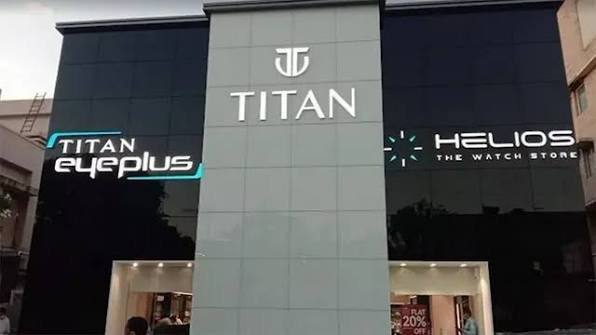
Titan Company carries a market capitalisation of roughly ₹4,48,368 crore, trading at a P/E ratio around 78-83x, with Q1 FY27 jewellery revenue growing 18% and a 12.2% EBIT margin, the strongest profitability among all listed Indian jewellers. Through its Tanishq brand, Titan commands roughly 7-8% of India’s organised jewellery market, backed by Tata Group ownership and consistently above-sector customer satisfaction and quality assurance credentials that competitors have struggled to match.
That premium valuation genuinely reflects execution rather than pure optimism, since Titan’s competitive position has continued strengthening relative to every other organised player, and analysts specifically note the distance between Titan and its nearest challengers is widening rather than narrowing, even as Kalyan Jewellers posts faster percentage revenue growth off a considerably smaller base.
2. Kalyan Jewellers
Kalyan Jewellers grew jewellery revenue 28% in Q1 FY27 through its Franchise Owned Company Operated (FOCO) expansion model, opening 22 new FOCO stores during the quarter to take its total past 240 nationwide, though margins came in at a comparatively thin 6.8%. The company trades at a P/E of 42.84, considerably below Titan’s premium multiple, offering what analysts describe as a more attractive entry point for investors betting on sustained expansion into Tier 2 and Tier 3 cities beyond its traditional South and West India stronghold.
Management has guided that the FOCO model will turn margin-accretive at the store level within roughly 18 months, a projection Nuvama and Kotak analysts have modelled favourably, though the genuine execution question is whether Kalyan can maintain its store-opening cadence, since a slowdown would make the current revenue growth look considerably more expensive relative to margin delivery.
3. Senco Gold and Diamonds
Senco Gold delivered ₹1,380 crore in Q1 FY27 revenue, up 22% year-on-year, with a 7.4% EBITDA margin, the strongest showing among smaller listed peers, while trading at a genuinely undervalued P/E of 9.65 against a sector average of 52.35, alongside a 22.85% return on equity comparable to Kalyan Jewellers despite the dramatically lower multiple. Headquartered in Kolkata, the company dominates East India’s jewellery market across West Bengal, Odisha, Assam, and Jharkhand, benefiting from a high-per-capita gold consumption region where rural demand rose 17% in the same quarter.
That combination of strong regional dominance and a considerably lower valuation multiple than Titan or Kalyan reflects the market’s tighter geographic concentration discount, since Senco’s model sacrifices national scale for operational density, a trade-off that’s delivered genuinely strong margins but limits the growth ceiling relative to nationally expanding competitors.
4. Thangamayil Jewellery
Thangamayil Jewellery carries a market capitalisation of ₹16,680 crore, with net sales of ₹9,606.47 crore and net profit of ₹391.04 crore over the latest four quarters, alongside a striking 139.39% one-year stock return. The company owns Tamil Nadu’s mid-tier jewellery market specifically, though its P/E ratio of 54.70 and EV/EBITDA of 32.88 have pushed it from a fair to an expensive valuation grade, with a PEG ratio of 0.78 suggesting the stock’s rally has priced in considerable future growth expectations.
That valuation stretch, comparable to or exceeding Kalyan Jewellers’ own expensive rating, means Thangamayil’s continued re-rating genuinely depends on sustaining its regional dominance in Tamil Nadu without the kind of national expansion risk Kalyan is currently navigating.
5. PC Jeweller
PC Jeweller has positioned itself as the Tier 2 city jewellery specialist under new management, attempting a genuine turnaround after a difficult period reflected in its -16.15% one-year return, the weakest among major listed jewellery peers, and a below-average capital structure rating relative to competitors like Titan and P N Gadgil Jewellers. That turnaround narrative makes PC Jeweller a genuinely higher-risk name within this sector, distinct from the steadier growth stories at Senco Gold or Thangamayil, since its recovery depends heavily on management execution rather than simply riding broader organised-sector formalisation tailwinds.
6. P N Gadgil Jewellers
P N Gadgil Jewellers maintains a strong regional foothold entrenched specifically in Maharashtra, holding a good capital structure rating alongside Titan Company among listed jewellery peers, reflecting genuinely conservative balance sheet management relative to more leveraged competitors like Kalyan Jewellers and PC Jeweller. The company’s shares rallied 3% during a broader June 2026 sector-wide surge triggered by rising gold prices, alongside gains at Kalyan, Titan, Senco, and Sky Gold, reflecting how closely regional players trade in correlation with sentiment set by the sector’s larger names.
7. Malabar Gold & Diamonds
Malabar Gold & Diamonds operates as one of India’s largest jewellery retailers by scale, though it remains privately held rather than publicly listed, distinguishing it from the exchange-traded names dominating this ranking’s financial disclosures. The company’s genuine global scale, spanning showrooms across India and significant international markets including the Gulf region, gives it a fundamentally different growth and financing model than the FOCO-driven expansion strategies pursued by Kalyan Jewellers and Titan within the domestic listed market.
8. Joyalukkas
Joyalukkas maintains a substantial jewellery retail presence built on decades of brand trust, operating primarily as a privately held company rather than through the public markets where Titan, Kalyan, and Senco Gold trade. That private ownership structure means Joyalukkas’ growth strategy and capital allocation decisions aren’t subject to the same quarterly market scrutiny driving valuation swings across the listed names covered elsewhere in this ranking, giving it genuine flexibility in how aggressively it pursues store expansion relative to publicly accountable competitors.
9. CaratLane (Titan subsidiary)
CaratLane operates as Titan Company’s digital-first jewellery subsidiary, extending the broader Tanishq ecosystem’s reach into online and omnichannel retail specifically targeting younger, digitally native consumers who prefer researching and purchasing jewellery through e-commerce channels before an in-store visit. That digital positioning gives Titan genuine coverage across both its traditional Tanishq store network and CaratLane’s online-first model simultaneously, a dual-channel advantage few competitors, aside from Kalyan Jewellers’ Candere platform, have replicated with comparable scale.
10. Vaibhav Global
Vaibhav Global operates as India’s teleshopping and e-commerce jewellery specialist, serving primarily the UK and US markets rather than competing directly in India’s domestic retail jewellery landscape the way Titan, Kalyan, and Senco Gold do. That export and international e-commerce orientation genuinely differentiates Vaibhav Global’s business model from every other name on this list, positioning it as a play on Western consumer demand for value-priced Indian-manufactured jewellery rather than India’s own domestic formalisation and wedding-demand growth story.
Frequently Asked Questions
Q1. Which jewellery company holds the largest market capitalisation in India?
A: Titan Company, through its Tanishq brand, holds by far the largest market capitalisation among listed Indian jewellers at roughly ₹4,48,368 crore, with the highest return on equity in the sector at 32.31%, reflecting a genuinely dominant competitive position that analysts say continues widening relative to challengers.
Q2. Why does Senco Gold trade at such a low valuation despite strong growth and margins?
A: Senco Gold’s P/E of 9.65 against a sector average of 52.35 reflects its concentrated geographic focus in East India rather than any operational weakness, since its 22.85% return on equity is comparable to Kalyan Jewellers despite the much lower multiple, making it one of the sector’s most attractively valued names.
Q3. What is the FOCO model Kalyan Jewellers is using to expand, and does it actually work?
A: FOCO (Franchise Owned Company Operated) lets Kalyan expand store count rapidly without bearing full capital costs, and while this diluted its Q1 FY27 margin to 6.8%, management projects the model will turn margin-accretive at the store level within roughly 18 months, a thesis analysts view as coherent provided store-opening momentum holds.
Q4. How is the shift from unorganised to organised jewellery retail affecting these companies?
A: Mandatory BIS gold hallmarking and GST compliance have raised costs for unorganised jewellers, while organised players offering HUID hallmarked jewellery are gaining share, with the organised segment’s overall market share projected to grow from roughly 30% to 40% by 2028, directly benefiting Titan, Kalyan, and Senco.
Q5. Are private companies like Malabar Gold and Joyalukkas comparable in scale to listed players like Titan?
A: Yes, both Malabar Gold & Diamonds and Joyalukkas operate at substantial scale with extensive showroom networks across India and international markets, but their private ownership structure means detailed quarterly financial disclosures aren’t publicly available in the same way they are for listed companies like Titan, Kalyan Jewellers, and Senco Gold.