




The food franchise industry in India is experiencing one of its most robust growth phases — driven by a rapidly expanding middle class, rising preference for branded dining experiences, increasing urbanisation, and the explosive growth of food delivery platforms that extend franchise revenue beyond physical footfall. India’s food service market is projected to cross ₹7.76 lakh crore by 2028, and franchising has emerged as the most accessible and most reliable entry point for entrepreneurs who want to own a business with proven systems, established branding, and ongoing operational support rather than building from scratch.
Choosing the right food franchise requires evaluating investment requirements, brand strength, territory availability, support quality, and realistic return timelines — not just the attractiveness of the brand name. These five franchises represent the best combination of brand credibility, investment accessibility, and genuine profitability for Indian entrepreneurs in 2026.
| Franchise | Investment Range | Area Required | Royalty Fee | Payback Period |
| Amul | ₹2 lakh–₹6 lakh | 100–300 sq ft | None | 1–2 years |
| Subway | ₹50 lakh–₹80 lakh | 300–500 sq ft | 8% of sales | 3–5 years |
| Wow! Momo | ₹10 lakh–₹30 lakh | 150–300 sq ft | 6–8% | 2–3 years |
| Chai Point | ₹10 lakh–₹20 lakh | 100–250 sq ft | 5–7% | 2–3 years |
| Domino’s | ₹50 lakh–₹1 crore | 1,000–2,000 sq ft | 5.5% | 4–6 years |
1. Amul Franchise — India’s Most Trusted Dairy Brand
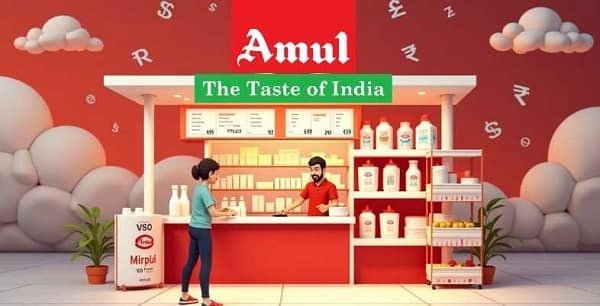
Amul is India’s most accessible, most trusted, and most financially rewarding entry-level food franchise — an extraordinary opportunity for entrepreneurs with modest capital who want the security of partnering with India’s most recognised food brand. Operated by the Gujarat Cooperative Milk Marketing Federation, Amul offers two primary franchise formats — the Amul Preferred Outlet (APO) and the Amul Ice Cream Scooping Parlour — both requiring minimal investment compared to their revenue potential.
The APO format requires an investment of approximately ₹2–6 lakh including setup, refrigeration, and initial stock — with zero royalty on sales, making it one of India’s rare franchise models where the franchisee retains full margin benefit without ongoing brand fee deductions. The brand’s universal recognition across every Indian demographic — from children to senior citizens, urban to rural consumers — eliminates the customer acquisition challenge that new food businesses typically face for months or years.
Monthly sales of ₹5–10 lakh are achievable at well-located outlets, with margins of 10–20% on dairy products providing sustainable profitability. The scooping parlour format, requiring ₹5–6 lakh investment in a 100–300 sq ft space, captures higher margins on ice cream and value-added dairy products while benefiting from impulse purchase traffic that dairy product outlets generate naturally.
Key Advantage: Zero royalty and India’s highest brand recall make Amul the safest franchise investment for first-time entrepreneurs with limited capital.
2. Subway — India’s Leading Quick Service Restaurant
Subway is India’s most established international QSR franchise with over 600 outlets across the country — offering entrepreneurs a proven global brand, comprehensive training and support systems, and the growing demand for perceived healthy fast food that Subway’s fresh, customisable sandwich positioning captures effectively. Its franchise model is well-documented, support infrastructure is mature, and brand awareness among India’s urban young professional demographic is exceptionally strong.
Investment requirements of ₹50–80 lakh cover franchise fee, store setup, equipment, and working capital for a 300–500 sq ft outlet. The 8% royalty on gross sales is among the higher franchise fees on this list but is justified by the global brand strength, proprietary systems, and continuous marketing investment that Subway makes in its India operations. Subway’s increasing localisation — adding Indian-specific fillings, vegetarian options, and spice levels — has significantly improved its appeal to the broader Indian consumer market beyond the initial metro professional demographic.
Average monthly revenues of ₹8–15 lakh at well-located outlets with food courts, IT parks, educational institutions, and high-street commercial locations deliver payback periods of 3–5 years at typical operating margins.
Key Advantage: Global brand recognition, comprehensive franchisee training programme, and strong positioning in the health-conscious fast food segment growing rapidly among Indian millennials.
3. Wow! Momo — India’s Fastest Growing Homegrown QSR
Wow! Momo has emerged as one of India’s most exciting domestic franchise success stories — growing from a single Kolkata stall in 2008 to over 600 outlets nationally, establishing momos as a mainstream QSR category rather than a street food niche. The brand’s rapid expansion, increasing institutional investment, and demonstrated ability to build loyal repeat customer bases in Tier-1 and Tier-2 cities makes it one of 2026’s most compelling franchise opportunities.
Investment of ₹10–30 lakh for a 150–300 sq ft kiosk or compact restaurant format makes Wow! Momo accessible to a significantly wider range of entrepreneurs than international QSR brands. The brand’s diverse menu — extending beyond traditional momos to Wow! Burger, Wow! Chinese, and dessert momos — increases per-customer average order value and provides menu diversity that keeps customers returning across different occasions. Franchise support includes centralised kitchen training, supply chain management, and outlet design standardisation.
Monthly revenues of ₹4–10 lakh at active locations with 25–35% food margin potential deliver payback periods of 2–3 years — among the most attractive return profiles in the food franchise category.
Key Advantage: Low investment threshold, India’s fastest growing domestic QSR brand, and a product that has achieved genuine mass market appeal across age groups and income levels.
4. Chai Point — India’s Leading Organised Tea Chain
Chai Point has built India’s most credible organised chai franchise model — capturing the enormous daily beverage consumption opportunity that the unorganised tea sector serves but without the quality consistency, hygiene standards, and brand experience that modern Indian urban consumers increasingly demand. With over 150 stores and expanding aggressively in 2026, Chai Point represents the strongest franchise play in India’s ₹50,000 crore organised tea market.
Investment of ₹10–20 lakh for a compact 100–250 sq ft format makes Chai Point accessible for entrepreneurs targeting high footfall locations — IT campuses, metro stations, business parks, and residential community commercial areas. The brand’s proprietary tea brewing technology, standardised ingredient supply, and app-based ordering integration address the operational challenges that most small food franchise operators struggle with. Corporate catering contracts — Chai Point supplies tea services to numerous Bangalore and Pune IT campuses — add a revenue stream beyond walk-in retail.
The daily repeat purchase nature of tea consumption creates exceptional customer stickiness — a quality office-area Chai Point outlet with strong breakfast and evening snack offerings can build a reliable daily footfall base that generates consistent monthly revenues of ₹3–8 lakh.
Key Advantage: Low investment, exceptionally high repeat purchase frequency, and a massive underserved organised chai market where genuine quality differentiation commands premium pricing.
5. Domino’s — India’s Dominant Pizza QSR
Domino’s is India’s most successful international food franchise by outlet count — operating over 1,800 stores nationally with demonstrated unit economics that make it one of the most financially transparent franchise investments available. Its 30-minute delivery guarantee, deep online ordering infrastructure, and consistent product quality have made it the default pizza choice for India’s urban households — a genuinely dominant market position that new entrants cannot replicate.
Investment of ₹50 lakh–₹1 crore for a full restaurant format represents the highest investment on this list but is supported by the strongest revenue visibility — established Domino’s outlets in good locations generate monthly revenues of ₹15–30 lakh with consistent performance data that banks and institutional lenders treat as reliable collateral for franchise financing.
The brand’s continuous menu innovation — Indian flavour variants, regional specials, and value combo offers — maintains relevance across economic cycles and customer demographic shifts. Jubilant FoodWorks’ master franchise management of Domino’s India provides franchisees with sophisticated operational support, supply chain reliability, and marketing investments at a scale independent operators cannot access.
Key Advantage: Strongest brand recognition and revenue visibility in India’s pizza QSR segment, with proven unit economics and institutional lending support making financing more accessible than comparable investments.
Frequently Asked Questions (FAQs)
Q: Which food franchise requires the lowest investment in India 2026?
A: Amul franchise requires the lowest investment — ₹2–6 lakh — with zero royalty, making it India’s most accessible food franchise for first-time entrepreneurs.
Q: Which food franchise gives the fastest return on investment?
A: Amul and Chai Point typically deliver the fastest payback — 1–3 years — due to low initial investment and high repeat purchase frequency.
Q: Is food franchise business profitable in smaller Indian cities?
A: Amul, Wow! Momo, and Chai Point all perform strongly in Tier-2 and Tier-3 cities. Subway and Domino’s perform best in Tier-1 cities and large Tier-2 urban centres.
Q: What is the most important factor when choosing a food franchise location?
A: Footfall quality and volume — proximity to offices, educational institutions, residential complexes, and high-street commercial areas consistently determines franchise revenue more than any other single factor.
Q: Do food franchise owners need prior food industry experience?
A: Not mandatory — all five franchises on this list provide comprehensive training programmes. Business management aptitude, financial discipline, and operational commitment matter more than specific food industry background.
 Saurav