



Delhi — India’s capital and its most economically diverse metropolitan region — offers small business entrepreneurs a market environment of extraordinary breadth and complexity. With a population exceeding 32 million across the NCR, a massive concentration of government employees, corporate professionals, traders, students, and tourists, and one of India’s highest per capita income averages among major cities, Delhi presents small business opportunities that span every sector, every price point, and every consumer demographic imaginable.
Delhi’s specific market characteristics — intense competition balanced by enormous scale, strong street food and retail culture, a wedding and celebration economy of national significance, and rapidly growing middle-class appetite for quality services — define which business ideas generate genuine profits and which get lost in the crowd.
| Business Idea | Investment Required | Monthly Revenue Potential | Target Customers | Competition Level |
| Street Food Stall / QSR | ₹50,000–₹3 lakh | ₹80,000–₹3 lakh | Everyone | High |
| Wedding Planning Services | ₹50,000–₹2 lakh | ₹1 lakh–₹5 lakh | Families, corporates | Medium |
| Boutique / Ethnic Fashion | ₹1 lakh–₹3 lakh | ₹60,000–₹2 lakh | Women, wedding shoppers | Medium |
| Tiffin and Meal Prep Service | ₹30,000–₹1 lakh | ₹60,000–₹2 lakh | Students, professionals | Medium |
| Driving School | ₹2 lakh–₹5 lakh | ₹80,000–₹2.5 lakh | Youth, working adults | Low-Medium |
1. Street Food Stall or Quick Service Restaurant
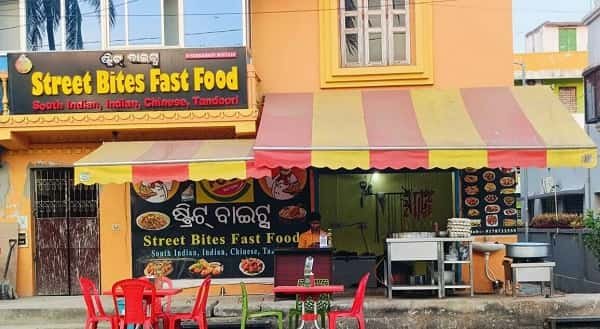
Delhi’s street food culture is not merely popular — it is arguably India’s most commercially productive food economy, generating billions of rupees annually through the beloved golgappa counters, chole bhature stalls, momos kiosks, and paratha corners that define the city’s culinary identity. Delhi consumers are among India’s most knowledgeable and most enthusiastic food seekers — willing to travel significant distances for genuinely exceptional street food and equally willing to pay premium prices when quality justifies it.
The business case for a quality street food operation in Delhi is compelling — a well-located momos stall in a busy market like Sarojini Nagar, Lajpat Nagar, or Connaught Place can generate ₹15,000–₹30,000 daily revenue from relatively modest setup investment. The key differentiation in Delhi’s crowded street food market is consistency and hygiene — consumers who find a reliable, clean, consistently delicious stall become intensely loyal daily customers.
Starting with a single speciality — one dish executed exceptionally rather than a broad menu executed averagely — builds reputation faster in Delhi’s food market than versatility. Cloud kitchen variants targeting Swiggy and Zomato delivery from a home or commercial kitchen provide food business entry without the footfall dependency of a physical stall.
Key Success Factors: Prime location with genuine footfall, absolute taste consistency, visible cleanliness standards that Delhi’s increasingly hygiene-conscious consumers reward with loyalty.
2. Wedding Planning and Event Management
Delhi-NCR is India’s single largest wedding market by value — with families across Delhi, Gurgaon, Noida, and Faridabad collectively spending thousands of crores annually on weddings that typically span 3–5 days of celebrations. The average Delhi wedding budget has increased consistently over the past decade, and the proportion of families delegating planning responsibility to professional event managers rather than coordinating independently has grown dramatically among middle and upper-middle-class households.
A wedding planning business requires primarily relationship capital — vendor networks connecting clients with reliable caterers, decorators, photographers, musicians, and venue managers — alongside the organisational competence to coordinate multiple vendors simultaneously toward a shared deadline. Physical investment is minimal but the business generates substantial fee income — typical Delhi wedding planner fees range from ₹50,000 for basic coordination to ₹5 lakh for full-service luxury wedding management.
Corporate event management — product launches, annual days, dealer meets — provides year-round revenue that supplements the October–February and April–June wedding season peaks, creating income diversification that pure wedding businesses lack.
Key Success Factors: Impeccable vendor relationships, personal referral network from satisfied clients, and the crisis management capability that multi-vendor event coordination inevitably requires.
3. Boutique and Ethnic Fashion Business
Delhi’s fashion culture — particularly in established residential markets like Lajpat Nagar, Karol Bagh, Chandni Chowk, and South Delhi’s upscale localities — creates outstanding opportunity for boutique and ethnic fashion businesses targeting the enormous demand for customised, well-designed ethnic wear. Delhi women are among India’s most fashion-aware consumers, and the city’s wedding economy generates year-round demand for lehengas, designer suits, and ethnic coordinates that generic ready-to-wear cannot satisfy.
A boutique combining curated fabric retail with in-house stitching services addresses the specific demand for personalised ethnic clothing that mass market brands fail to serve. Home-based boutique models targeting referral networks within residential colonies or apartment complexes minimise rental costs while building deeply personal client relationships. Social media marketing through Instagram Reels showcasing finished garments and fabric selections has made boutique customer acquisition in Delhi significantly more cost-effective than traditional advertising.
Bridal wear specialisation — lehengas, heavy embroidery sarees, designer suits for wedding functions — commands ₹5,000–₹50,000 per garment with margins that make even modest monthly order volumes financially rewarding.
Key Success Factors: Distinctive design aesthetic, reliable stitching quality, and an Instagram presence that showcases craftsmanship to Delhi’s digitally engaged fashion consumers.
4. Tiffin and Meal Preparation Service
Delhi hosts millions of students, working professionals, and migrant workers who live away from their home states and families — creating perpetual demand for home-cooked, affordable, culturally familiar daily meals. The student populations of Delhi University, Jamia Millia, JNU, and dozens of private colleges represent particularly concentrated tiffin service demand — living in paying guest accommodations without kitchen access and surviving on restaurant food that is both expensive and nutritionally inadequate for daily consumption.
Monthly subscription tiffin services priced at ₹2,500–₹4,500 per student generate predictable recurring revenue from the 30–50 subscribers that most quality services attract through campus word-of-mouth referrals. North Indian home cooking — dal, sabzi, roti, rice, pickle — represents Delhi’s highest-demand tiffin cuisine, while regional specialties serving specific community populations command premium pricing.
Starting from a home kitchen with FSSAI registration, building initial subscriber base through WhatsApp groups and college notice boards, and expanding to local delivery partnerships creates a scalable model that requires minimal capital but generates meaningful income.
Key Success Factors: Consistent food quality, reliable daily delivery without exceptions, and the personal warmth in customer relationships that distinguishes home tiffin services from impersonal commercial alternatives.
5. Driving School
Delhi’s massive and continuously growing vehicle ownership — combined with mandatory driving licence requirements and genuine safety-consciousness among new drivers navigating the city’s challenging traffic — creates consistent year-round demand for professional driving instruction. The organised driving school market in Delhi remains relatively underserved by quality operators — most existing schools provide technically adequate but experientially poor training that leaves a clear quality gap for professional operators.
Investment of ₹2–5 lakh covers vehicle purchase or lease, instructor certification, registration with the Regional Transport Office, and basic office setup. Monthly revenues from 15–25 students paying ₹5,000–₹8,000 per course generate ₹80,000–₹2 lakh. Corporate tie-ups providing driver training for company employees, women-only driving programmes addressing Delhi’s strong demand for female instructors, and four-wheeler plus two-wheeler combined packages increase average revenue per student.
Key Success Factors: Patient, professional instructors — particularly female instructors who are extremely high-demand in Delhi — and a structured training curriculum that builds genuine driving confidence.
Frequently Asked Questions (FAQs)
Q: Which is the most profitable small business in Delhi for beginners?
A: Tiffin services offer the lowest entry investment with strong recurring revenue — Delhi’s massive student and migrant professional population creates consistent demand that quality operators capture quickly.
Q: What areas in Delhi are best for small business?
A: Lajpat Nagar, Karol Bagh, and Chandni Chowk for retail and fashion. Sarojini Nagar and CP for food businesses. South Delhi residential colonies for home-based service businesses.
Q: Do small businesses in Delhi face too much competition?
A: Competition is high but the market scale is enormous — Delhi’s 32 million population means even a small market share supports profitable businesses. Quality differentiation consistently wins.
Q: What licences are needed for a food business in Delhi?
A: FSSAI registration, GST registration above ₹20 lakh turnover, and MCD trade licence for commercial premises.
Q: Is wedding planning a year-round business in Delhi?
A: Wedding season peaks October–February and April–June, but corporate event management fills the remaining months for planners who diversify beyond weddings.
 Saurav