

Somewhere in a Bengaluru factory right now, a machine is stitching a shirt that’ll end up on a rack in a Zara store in Madrid within weeks. That’s the unglamorous reality behind India’s apparel industry — less about runway glamour, more about relentless, precision-timed production at a scale most people never think about. India ships ready-made garments to 111 countries and pulled in US$15,694.9 million in RMG exports in FY26 alone, holding steady as the world’s second-largest garment manufacturer behind China. Behind those export numbers sit a handful of companies doing the actual stitching, cutting, and shipping for brands whose names you’d recognise instantly. Here are ten of them.
1. Shahi Exports
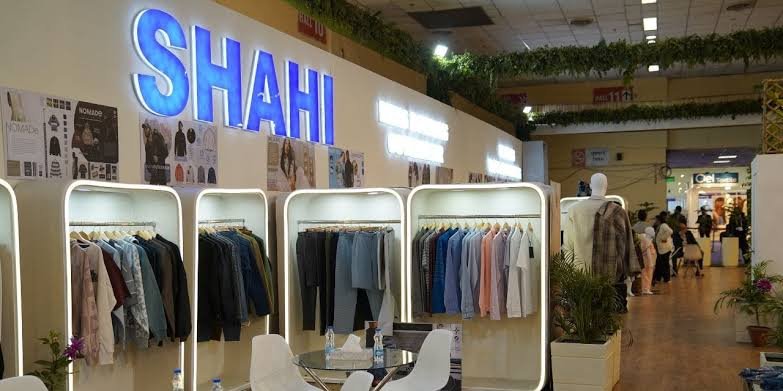
Start with the biggest, because there’s no getting around it. Shahi Exports began in 1974 as a home-based operation started by Sarla Ahuja and has grown into something almost unrecognisable from those roots — over 50 factories, three processing mills, spread across eight Indian states, and a workforce topping 100,000 people, 70 percent of them women. The company turns out roughly three million garments a day for buyers that include Zara, H&M, and Adidas.
What sets Shahi apart isn’t just the scale, though the scale is staggering. It’s the company’s reputation for treating labour welfare as core business rather than a compliance checkbox, which has made it one of the more frequently cited case studies in ethical garment manufacturing coming out of India.
2. Arvind Limited
Arvind doesn’t make shirts so much as it makes the fabric that becomes shirts, jeans, and jackets for half the Western world. Founded in 1931 and headquartered in Ahmedabad, it’s the world’s fourth-largest denim manufacturer, turning out more than 300 million metres of denim annually for clients like Tommy Hilfiger and GAP, while also running its own domestic label, Flying Machine.
The company has leaned hard into sustainability messaging — water-saving dye processes, zero-discharge claims — but it’s the technical textiles arm, producing protective fabrics for industrial and military use, that quietly diversifies Arvind away from pure fashion-cycle dependency. Revenue in this segment has crossed ₹8,000 crore in recent reporting.
3. Gokaldas Exports
Gokaldas has been around since 1979, which in an industry that eats young companies for breakfast counts as genuine staying power. It’s built its name on both casual and formal wear for export markets, running a production model that leans on consistency over flash — the kind of manufacturer a global buyer picks precisely because nothing surprising ever happens with an order.
That reliability has kept Gokaldas relevant across four and a half decades of shifting fashion cycles, trade policy changes, and at least two major global recessions, which says something about how the company’s built for endurance rather than trend-chasing.
4. Orient Craft
Orient Craft occupies a specific niche: knit and woven apparel done at genuine volume, roughly 200 million garments a year, out of 21 manufacturing units concentrated around Delhi NCR and employing close to 10,000 people. Revenue sits above ₹2,300 crore. Its buyer list reads like a fast-fashion who’s-who — H&M, Zara, Gap, Old Navy.
The company keeps embroidery, washing, knitting, and sampling all in-house, which is a deliberate choice — it means Orient Craft controls quality at every stage rather than outsourcing pieces of the process and hoping subcontractors hit the same bar.
5. Pearl Global Industries
Pearl Global runs out of Gurugram and has built a reputation on being genuinely global rather than India-anchored — production facilities spread across multiple countries, not just Indian states, which gives it flexibility that purely domestic manufacturers can’t match when trade tariffs shift or a specific market suddenly wants faster turnaround.
For international buyers juggling multiple sourcing geographies at once, Pearl Global’s multi-country footprint reduces the single-point-of-failure risk that comes with relying entirely on one country’s labour costs, currency, or trade policy.
6. Page Industries
Page Industries holds something unusual for an Indian manufacturer: the exclusive Jockey license for India, which turns what could’ve been a straightforward innerwear-and-athleisure manufacturing business into a genuine consumer brand story. Headquartered in Bengaluru, the company exports innerwear and athleisure globally while dominating that category domestically under the Jockey name.
That dual identity — licensed brand owner and manufacturer at once — gives Page a pricing power that pure contract manufacturers simply don’t have, since it isn’t just filling somebody else’s purchase order, it’s building its own retail equity at the same time.
7. Raymond Limited
Raymond needs almost no introduction in India — founded in 1925, it’s spent a century becoming synonymous with suiting fabric, running over 1,500 retail stores and exporting to more than 55 countries. Revenue exceeds ₹5,900 crore. Beyond the flagship Raymond label, the company’s brand portfolio includes Park Avenue, Parx, ColorPlus, Ethnix, and its made-to-measure tailoring line.
The company recently demerged its real estate business into Raymond Realty, a restructuring move that’s let its core textile and apparel operations be evaluated on their own merits for the first time in years, rather than getting lumped in with unrelated property holdings.
8. Aditya Birla Fashion & Retail (ABFRL)
ABFRL traces its lineage back to Madura Garments, established in 1988, and has since grown into India’s largest fashion retail company by portfolio breadth, managing a sprawling collection of premium and mass-market apparel brands out of its Mumbai headquarters. Unlike the pure-play export manufacturers on this list, ABFRL’s core business is brand ownership and retail, with manufacturing coordinated through a network of owned and partner factories rather than centralised in-house production.
That asset-light manufacturing model lets ABFRL move faster on brand acquisitions and portfolio expansion than a company that has to build or retrofit its own factories every time it enters a new category.
9. KPR Mill
KPR Mill runs one of the more genuinely vertically integrated operations in Indian textiles, controlling everything from spinning through garmenting under one roof rather than depending on external suppliers at each stage. That integration gives it tighter control over costs and lead times than manufacturers who buy fabric from one place and stitch it somewhere else entirely.
For international buyers who care about supply-chain traceability — increasingly a real concern given tightening EU and US sustainability disclosure rules — KPR’s single-company control over the production chain is a genuine selling point rather than just an efficiency play.
10. Kitex Garments
Kitex has carved out a deliberately narrow specialty: infant and kids’ wear, exported primarily to the United States and Europe from its Kerala manufacturing base. That narrowness is the whole strategy — rather than competing across every apparel category the way Shahi or Orient Craft do, Kitex has built deep expertise in one demanding niche where safety certifications and fabric standards are considerably stricter than adult clothing.
Kitex’s position as a specialist rather than a generalist has made it the default reference point for global kidswear brands looking for an Indian manufacturing partner who already understands the category’s unique compliance requirements.
Frequently Asked Questions
Q1. Which company is India’s largest apparel manufacturer and exporter?
A: Shahi Exports holds that position by production capacity, running over 50 factories across eight states with more than 100,000 employees and producing around three million garments daily for global brands including Zara, H&M, and Adidas. It has held this position since building up from a home-based operation founded in 1974.
Q2. How does India rank globally as a garment manufacturing and export destination?
A: India is the world’s second-largest garment manufacturer and among the top exporters globally, alongside China, Bangladesh, and Vietnam, exporting ready-made garments to over 111 countries. India’s RMG exports stood at US$15,694.9 million in FY26, a modest 1.32 percent rise over the previous year but an 11.3 percent jump compared to FY24, reflecting steady if uneven growth momentum.
Q3. What’s the difference between a textile company and a garment manufacturer in India, since many companies are described as both?
A: Textile companies typically produce raw materials like yarn and fabric, while garment manufacturers cut, stitch, and finish that fabric into wearable clothing, though many large Indian companies like Arvind and Raymond operate across both stages under one roof. This vertical integration, spanning fibre through finished garment, is increasingly common among India’s top players precisely because it gives them tighter cost and quality control than depending on external fabric suppliers.
Q4. Why do so many global fast-fashion brands source specifically from Indian manufacturers rather than elsewhere in Asia?
A: India offers a rare combination of low minimum order quantities, sometimes as low as 100-300 pieces for woven garments, alongside the production scale needed for bulk orders from major retailers, giving buyers flexibility that few other manufacturing hubs match. Government infrastructure investments like the PM MITRA textile parks and anticipated trade agreements such as the India-EU FTA are further strengthening this positioning heading into the later part of the decade.
Q5. What emerging trends are shaping India’s apparel manufacturing sector heading into the rest of 2026?
A: Sustainable and circular fashion is one of the fastest-growing segments, with organic textile exports growing at roughly 25 percent CAGR, alongside expanding demand for technical textiles used in protective and industrial applications. India’s overall textile and apparel market, valued at USD 248.70 billion in 2025, is projected to reach USD 656.31 billion by 2034, driven by this shift toward higher-value, more specialised manufacturing rather than commodity-level production alone.