
India’s footwear industry stands as the world’s second-largest producer and consumer after China, and the recent EU tariff cut on footwear imports from 17% to zero has opened a genuine export opportunity that analysts expect established Indian manufacturers to capture fastest. This ranking of the top 10 footwear manufacturers in India 2026 looks at who’s actually posting the revenue growth, store expansion, and margin performance to prove it, from heritage retailers navigating a digital-first turnaround to mass-market giants selling 400 million pairs a year.
1. Bata India
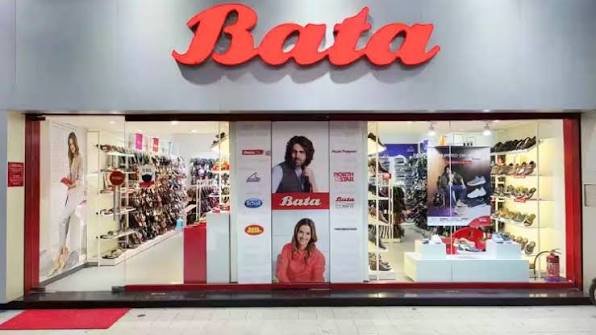
Bata India carries a market capitalisation of roughly ₹9,000-15,700 crore depending on the trading window, with recent net sales of ₹788 crore for the quarter and net profit of ₹46 crore, against a P/E ratio that has climbed as high as 67x, reflecting investor expectations around its ongoing digital-first transformation under new management. The company operates over 2,000 stores nationwide and manufactures across multiple Indian plants under a house of brands spanning Bata, Bubblegummers, Hush Puppies, Power, Weinbrenner, and Naturalizer, positioning it as the largest footwear retailer and manufacturer in the country.
That scale, combined with roughly nine decades of brand heritage, makes Bata the most defensively positioned name in the sector, with the school-shoe and formal office footwear categories providing predictable seasonal demand peaks that competitors focused purely on athleisure don’t enjoy. The genuine open question is whether its digital transformation can meaningfully re-accelerate growth among younger consumers, since sales growth over the trailing five years has lagged nimbler, athleisure-focused peers like Campus Activewear.
2. Relaxo Footwears
Relaxo holds a market capitalisation ranging from roughly ₹7,500 crore to ₹12,000 crore across recent quotes, with Q1 FY27 revenue rising 7.7% to ₹705 crore and profit after tax up 12.4% to ₹55 crore, on trailing annual revenue of approximately ₹2,753 crore. Founded in 1984 and headquartered in Delhi with over 7,355 employees, the company sells more than 400 million pairs annually under brands including Sparx, Flite, Bahamas, Boston, and Schoolmate, roughly half of it non-leather footwear such as hawai chappals, floaters, and sandals.
Relaxo’s genuine competitive edge is manufacturing scale in the mass-market value segment, where its 3-year and 5-year sales CAGR of 6.7% and 6.6% respectively has meaningfully outpaced competitors like Mirza International and Khadim India, which grew at just 1-3% over the same period. The company also maintains a minimal debt-to-equity ratio of around 0.11 and a stable dividend payout ratio near 44%, giving it a genuinely conservative balance sheet that has held up through raw-material cost cycles better than several listed peers.
3. Metro Brands
Metro Brands, founded in 1977 and headquartered in Mumbai, listed via IPO in December 2021 and reported 15% revenue growth in Q3 FY26, driven by strong festive and wedding season demand alongside a GST reduction on footwear priced below ₹2,500. The company retails under its own brands, Metro, Mochi, Walkway, MetroActiv, Da Vinchi, and J.Fontini, while also distributing third-party names including Crocs, FitFlop, Fila, Clarks, Skechers, Puma, and Adidas, giving it a genuinely diversified multi-brand retail model rather than relying on a single manufacturing identity.
Analysts consistently flag Metro Brands as the highest-quality compounder in the sector, generating 50-60% return on capital employed and 18-22% annual revenue growth through primarily franchise-driven store expansion, a considerably higher return profile than the capital-intensive manufacturing model most peers on this list rely on. That franchise-heavy structure lets Metro scale store count without carrying the same balance-sheet weight as pure manufacturers, explaining why its ROE of 20.63% leads the sector.
4. Campus Activewear
Campus Activewear has built India’s largest sports and athleisure footwear brand by units sold, holding roughly 30% market share in the mass sports footwear segment, with revenue growing at approximately 20% annually driven by continued premiumisation within sports footwear. Headquartered in New Delhi, the company differentiates itself through vertically integrated manufacturing, controlling production directly rather than relying purely on third-party assembly, which management cites as a genuine cost advantage over assembly-only competitors.
That vertical integration matters increasingly as the athleisure megatrend accelerates across urban India, positioning Campus to capture rising demand for sneakers, running shoes, and lifestyle footwear specifically among younger consumers who have shown less brand loyalty to legacy names like Bata or Liberty. Campus is frequently cited alongside Relaxo and Bata as a direct beneficiary of the EU’s footwear tariff reduction, given its manufacturing scale and existing export infrastructure.
5. Liberty Shoes
Liberty Shoes shares surged 15% intraday to ₹269.20 in late January 2026, part of a broader rally that saw the stock bounce 28% from its 52-week low of ₹210.05 just two trading days earlier, reflecting genuine investor re-rating following strong sector-wide earnings from Metro Brands. Liberty’s growth and management-risk ratings trail the sector’s top-tier names, with analysts rating both as “average” compared to the “excellent” ratings assigned to Relaxo, Metro Brands, Bata, and Campus Activewear.
The company has also faced direct legal exposure, having been named alongside Bata and Relaxo in Crocs’ long-running design-infringement litigation over clog-shaped footwear, a case that was dismissed on technical grounds in 2019 before Crocs won permission on appeal to pursue it further. That litigation risk, combined with negative double-digit sales growth over the past three years, positions Liberty as a genuinely higher-risk turnaround story relative to the sector’s structurally growing names.
6. Khadim India
Khadim India carries a considerably smaller market capitalisation of roughly $18.9 million (about ₹157 crore), with trailing twelve-month revenue of $41.5 million and an EPS of just $0.02, reflecting its position as one of the more thinly capitalised names in the listed footwear space. The company operates a dual model, retail stores serving middle and upper-middle-income consumers across metros and Tier I-III cities, alongside a separate distribution network catering to lower and middle-income buyers through independent distributors.
Khadim shares rallied 10% to ₹182.90 during the same January 2026 sector-wide surge that lifted Liberty and RedTape, reflecting how closely smaller footwear names trade in correlation with sentiment set by sector leaders like Metro Brands, even when their own underlying fundamentals, in Khadim’s case a comparatively modest 1-3% sales CAGR, lag considerably behind.
7. RedTape (Mirza International)
RedTape shares climbed 12% to ₹123.40 during the January 2026 rally, part of the same sector-wide surge triggered by Metro Brands’ strong Q3 FY26 results and the GST cut on footwear priced below ₹2,500. Mirza International, RedTape’s parent, has historically posted sales CAGR in the 1-3% range over recent years, positioning it among the more modestly growing names relative to Relaxo or Campus Activewear, though analysts specifically rate its growth trajectory as “excellent” in some recent sector comparisons, reflecting a recent acceleration from that historical base.
RedTape’s positioning leans toward lifestyle and premium-adjacent footwear, competing more directly with Woodland and Liberty for consumers seeking branded identity beyond pure mass-market value, a segment where pricing power matters more than manufacturing scale alone.
8. Woodland
Woodland has built sustained brand recognition specifically in outdoor and adventure footwear, a genuinely distinct niche from the mass-market and athleisure positioning of Relaxo and Campus Activewear. The brand’s rugged, durability-focused product identity has kept it relevant among consumers specifically seeking weather-resistant footwear, differentiating it from the broader lifestyle and formal-wear categories most other names on this list compete within.
Unlike Campus Activewear’s rapid, sports-driven expansion, Woodland’s growth has stayed more measured, reflecting a deliberately narrower product focus that trades broader market share for stronger positioning within its specific outdoor-footwear niche.
9. Paragon Footwear
Paragon continues serving India’s price-sensitive footwear segment, built on a decades-long reputation for durability at accessible price points that has kept it relevant across generations of value-conscious Indian consumers. Alongside Khadim, Paragon represents the regional, mass-affordability tier of India’s footwear industry, competing less on brand cachet and more on distribution reach into smaller towns where premium athleisure and lifestyle brands have limited penetration.
That positioning gives Paragon genuine resilience during periods when discretionary, premium footwear spending slows, since its core customer base prioritises basic durability and price over the brand-driven purchasing decisions that increasingly define Metro Brands’ and Campus Activewear’s growth.
10. Superhouse
Superhouse shares rose 12% to ₹160.40 during the same January 2026 sector rally that lifted Liberty, RedTape, and Khadim, reflecting the broader re-rating across India’s smaller-cap footwear names following Metro Brands’ strong quarterly performance and the footwear GST reduction. The company sits among the leather-focused manufacturers competing for both domestic and export demand, positioning it to potentially benefit from the same EU tariff reduction that analysts flag as a tailwind for Relaxo, Campus Activewear, and Bata specifically.
Superhouse’s export orientation distinguishes it from the more domestically focused mass-market names on this list, though its comparatively smaller scale means it will likely need meaningful capacity investment to capture a proportionate share of the export opportunity that larger manufacturers are already positioning toward.
Frequently Asked Questions
Q1. Which Indian footwear company currently has the highest market capitalisation?
A: Bata India and Relaxo Footwears both carry market capitalisations in the ₹7,500-15,700 crore range depending on the specific trading date, making them the two largest listed pure-play footwear names, while Metro Brands, valued at roughly ₹29,150 crore based on recent data, is generally regarded as the highest-quality compounder given its 50-60% return on capital employed through franchise-driven retail expansion.
Q2. How will the EU’s footwear tariff reduction affect Indian manufacturers?
A: With India currently holding just a 3% share of EU footwear imports, the tariff cut from 17% to zero creates a genuine opportunity for Indian manufacturers to compete against Vietnam and China on cost, and ICICI Securities has specifically flagged Relaxo Footwear, Campus Activewear, and Bata India as the most likely beneficiaries, provided they invest in export-oriented, global-standard manufacturing capacity.
Q3. Why did footwear stocks like Liberty Shoes and Khadim India rally sharply in January 2026?
A: The rally followed Metro Brands’ strong Q3 FY26 earnings, which showed 15% revenue growth driven by festive and wedding season demand plus a GST reduction on footwear priced below ₹2,500, and the positive sentiment spread across the sector, lifting Liberty Shoes 15%, RedTape and Superhouse 12% each, and Khadim India and Metro Brands 10% each in a single trading session.
Q4. What distinguishes Campus Activewear’s manufacturing model from competitors like Bata or Relaxo?
A: Campus Activewear maintains vertically integrated manufacturing specifically for sports and athleisure footwear, giving it direct cost control that assembly-only or purely retail-focused competitors lack, and this has supported its roughly 20% annual revenue growth and 30% share of India’s mass sports footwear segment.
Q5. Which footwear manufacturer is considered the safest long-term investment in the sector?
A: Bata India is widely described as the most defensively positioned name given its 90-year brand heritage, 2,000-plus store network, and steady demand from school and formal footwear categories, though Relaxo Footwears offers a comparably conservative profile with minimal debt (D/E of roughly 0.11) and consistent dividend payouts near 44% of profit.