



Is a bookstore legal without business registration in India? Yes — a proprietorship covers most bookstores perfectly well, needing just standard trade licence and GST registration once you cross the usual thresholds. But here’s what most new bookstore owners don’t anticipate: modern bookstores rarely sell just books anymore, and the moment stationery, gift items, or a small café corner enter the mix, you’re managing a genuinely fiddly multi-rate billing situation that pure book retail never involves. Understanding this mixed-rate reality matters more for day-to-day operations than any registration question.
This distinguishes a new bookstore from the secondhand book business covered elsewhere in this series — where copyright and provenance were the central concerns. For a bookstore selling new stock, particularly one that’s expanded into stationery, gifts, or food service, the genuine operational challenge sits in getting your billing and tax treatment right across genuinely different rate categories sitting on the same invoice.
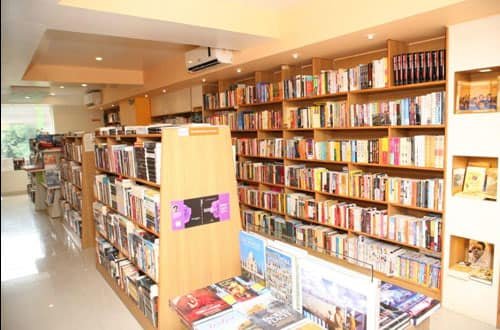
What “Registration” Actually Means for a Bookstore
The baseline is straightforward and mirrors most small retail businesses:
- A sole proprietorship works fine for most bookstores, needing just a PAN and business bank account
- GST registration, free to obtain, becomes necessary once your sales hit the applicable threshold or if you plan to sell across states
- A Shop and Establishment or Trade Licence for your physical premises, with fees varying by city but generally modest
Nothing here differs meaningfully from standard small retail setup. The genuine complexity begins once you look at what’s actually on your shelves.
The Mixed-Rate Billing Reality: Why “Bookstore” Rarely Means Just Books
This is worth understanding in real detail, because it’s the single most common operational headache for bookstore owners, and getting it wrong creates genuine compliance friction.
- Printed books — educational, fiction, religious, competition prep, even Braille books — fall under HSN 4901 and carry 0% GST uniformly across the category
- Stationery items — notebooks, pens, staplers — carry considerably different GST rates, generally ranging from 12% to 18%, meaning a single customer transaction combining a novel and a notebook needs to reflect two genuinely different tax treatments on the same bill
- Book bundles with accessories — a book sold with a companion CD, for instance — require the book value and accessory value to be invoiced separately, with 0% applying to the book portion and 18% applying to the accessory portion, provided they’re clearly split on the invoice
- E-books and digital content remain taxed at 18%, entirely distinct from physical printed books, so if your bookstore also sells digital access codes or e-reader content, that portion needs separate treatment
Getting this multi-rate structure right on every mixed transaction, rather than defaulting to a single rate across an entire bill, is genuinely the operational discipline that separates a compliant bookstore from one accumulating quiet billing errors that surface at audit time.
The Composition Scheme: A Genuinely Attractive Option for Small Bookstores
This is worth knowing specifically, since bookstores get a notably favourable rate under India’s GST Composition Scheme compared to most other retail categories. Bookstores with turnover up to ₹1.5 crore can opt for the composition scheme and pay a flat 1% GST on turnover — considerably lower than composition rates available to most other retail businesses.
- The trade-off is genuine: you cannot claim input tax credit on your purchases, and you cannot make inter-state sales while under this scheme
- Given that your core inventory — printed books — already carries 0% GST and therefore generates no meaningful ITC to claim regardless, the composition scheme’s ITC trade-off matters far less for a book-focused bookstore than it would for a business dealing primarily in taxable goods
- This makes composition scheme selection genuinely worth evaluating carefully for a bookstore specifically, since the usual downside of giving up input credit is less costly when your primary product line was already exempt to begin with
If You Sell to Schools or Institutions: Get the Invoice Format Right
This is a genuinely practical operational point worth internalising if your bookstore supplies schools, libraries, or institutional buyers rather than purely walk-in retail customers.
- Institutional and school B2B supply requires proper invoice formatting matching the confirmed purchase order, not an informal bill assembled from memory
- HSN codes must be correctly included on every line item — missing HSN details is a genuine, common rejection reason when institutional buyers or their accounting teams process your invoice for payment
- Mixed bills combining exempt books and taxable stationery in an institutional supply context need the same multi-rate discipline covered above, but with the added stakes of a formal buyer expecting precise, auditable documentation before releasing payment
Treating institutional and school supply invoicing with the same rigor as a formal B2B contract — rather than the informality that might work for a casual retail transaction — protects your relationship with recurring institutional buyers, who represent genuinely valuable repeat business for most bookstores.
E-Way Bill for Book and Stationery Movement
If your bookstore involves moving significant stock between locations, or fulfilling larger institutional orders, the standard e-way bill rule applies exactly as it would for any goods movement: an e-way bill is required for movement of books or stationery exceeding ₹50,000 in value, with validity running at one day per 100 kilometres of transport distance. This is worth building into your process specifically around large seasonal restocking — school reopening season and exam preparation periods, when bulk textbook orders and stock replenishment are most likely to cross this threshold.
If Your Bookstore Has a Café: A Completely Separate Licensing Layer
This is worth flagging clearly, given how common the bookstore-café hybrid model has become. The moment your bookstore serves food or snacks — even a modest coffee corner — you’ve added an entirely separate compliance requirement on top of your book retail operation:
- FSSAI licensing becomes mandatory for the food service component, following the same requirements covered for standalone cafés elsewhere in this series
- Cafés specifically attract 5% GST without input tax credit on food and beverage service, with their own composition scheme option available up to ₹1.5 crore turnover
- If you’re onboarding food delivery aggregators for your café corner, those platforms handle GST collection under their own mechanism, separate from how you invoice your book sales
Treat your café component as a genuinely distinct business layer requiring its own licensing and tax treatment, rather than assuming your bookstore’s general registration automatically covers food service — it doesn’t.
What Happens If You Get the Billing Wrong
The consequences here center almost entirely on the mixed-rate billing complexity covered above, since a well-run bookstore rarely faces the kind of dramatic licensing violations seen in more heavily regulated categories:
- Incorrect or missing HSN codes on invoices, particularly for institutional and B2B buyers, can result in rejected bills, delayed payments, and genuine friction with recurring institutional clients
- Applying a single flat rate across a mixed transaction, rather than correctly splitting exempt books from taxable stationery or accessories, creates compliance discrepancies that surface at return filing or audit
- Missing e-way bill documentation for bulk book or stationery movement above the threshold risks the same penalties and potential seizure covered for goods transport generally
- Running food service without proper FSSAI licensing exposes that specific part of your business to the standard food safety penalties covered elsewhere, regardless of how compliant your book retail operation itself is
FAQs
Q1. My small bookstore sells mostly books with a little stationery — does the composition scheme make sense for me?
Often yes, particularly since your core book inventory is already GST-exempt, meaning the composition scheme’s usual ITC trade-off costs you less than it would a business dealing primarily in taxable goods. Run the numbers on your specific stationery volume before deciding.
Q2. A customer buys a novel and a notebook in one transaction — how should I bill this correctly?
Show them as separate line items with their own applicable rates — 0% for the book, the applicable stationery rate (typically 12-18%) for the notebook — rather than applying a single blended rate across the whole bill.
Q3. I supply textbooks to a local school and they rejected my invoice — what likely went wrong?
Missing or incorrect HSN codes are a common rejection reason for institutional B2B invoices. Ensure every line item, including exempt books, carries the correct HSN code and that your invoice format matches their confirmed purchase order exactly.
Q4. I’m adding a small coffee counter to my bookstore — do I need to register this separately from my book retail business?
Yes, food service specifically requires FSSAI licensing regardless of how small the café component is, and this sits entirely separate from whatever registration covers your book and stationery retail operation.