





Is a car rental business legal without permit in India? No — and this is genuinely one of the more actively enforced answers in this entire series right now. India’s Rent-a-Cab Scheme sets out a clear legal path for operating a self-drive car rental business, and skipping it isn’t a quiet grey-area workaround. It’s an increasingly targeted enforcement priority, with real vehicle seizures and even a major platform’s local license cancellation happening in just the past few years.
Car rental has grown into a genuinely significant part of India’s mobility economy, spanning everything from airport self-drive counters to app-based platforms letting individual owners list their private cars for rent. That growth has pulled real regulatory attention with it, because a large share of vehicles being rented out informally — through classifieds, social media, or peer-to-peer arrangements — are simply private cars being used commercially without any of the required permissions.
The Rent-a-Cab Scheme: Your Actual Legal Foundation
Self-drive car rental in India operates under a formal licensing structure called the Rent-a-Cab Scheme, administered at the state level through the State Transport Authority. This is the specific permission that legitimises a self-drive rental business — not a general business registration, not a trade license, but this specific transport authority licence.
Getting this right requires understanding a few structural points:
- Only a registered company is eligible to rent out self-drive cars under this scheme in most states — informal, unregistered individual operators generally can’t obtain the license directly
- The procedure for registration differs from state to state, so you’ll need to approach the relevant RTO in your specific operating state with company details and a formal application, rather than assuming a single national process applies
- Fleet size thresholds sometimes apply — some states have historically required a minimum fleet size before granting rent-a-cab permission, which is part of why several markets remained dominated by a handful of larger operators for years
Why Self-Drive Vehicle Registration Differs From Both Private and Taxi Cars
This is a genuinely important technical distinction, and it’s where a lot of confusion creeps in. Self-drive rental vehicles don’t carry standard private plates, but they also aren’t registered identically to taxis:
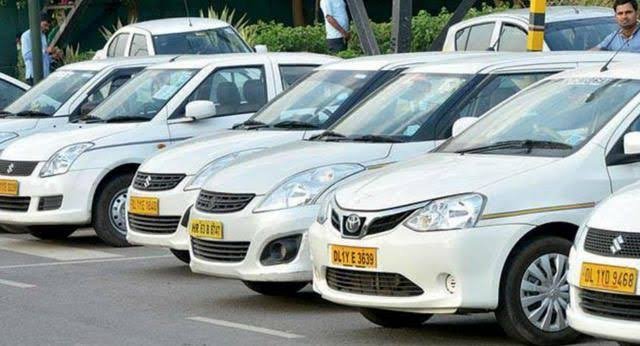
- Standard commercial taxis carry yellow plates with black lettering, and only commercial driving license holders can operate them
- Self-drive rental vehicles are registered under a distinct category — plates authorised specifically for self-drive rental — and critically, these can legally be driven by both commercial and non-commercial license holders, since the renter is simply an ordinary driver operating a vehicle they don’t own, not a professional chauffeur
Trying to run a self-drive rental business using privately registered vehicles, hoping the “self-drive” framing makes commercial registration unnecessary, is precisely the mistake regulators are actively cracking down on right now.
Real Enforcement Happening Right Now
This isn’t a theoretical risk — it’s playing out in real cities with real consequences for operators who skipped proper licensing:
- In Bengaluru during 2025, RTOs impounded 21 private vehicles that were being used for self-drive rentals without valid commercial permits — a direct, concrete enforcement action against exactly the “private car, rented commercially” pattern many informal operators rely on
- In Delhi, the Transport Department cancelled Zoomcar’s local operating license after finding the company was using private vehicles under commercial use, illustrating that even large, well-known platforms face real consequences when their vehicle mix drifts out of compliance
- Several state RTOs — including Goa, Kerala, and Rajasthan — are now cross-checking permit numbers digitally to identify illegal operators, meaning informal rental listings that skip proper registration are increasingly discoverable rather than quietly flying under the radar
If you’re weighing whether to formalise your rental fleet’s registration or continue operating informally, treat this enforcement trend as the clear signal it is: the space for informal, unregistered self-drive rental is shrinking rapidly, not staying static.
Insurance: The Gap That Bites Hardest When Something Goes Wrong
This is worth understanding in concrete terms, because it’s where an unlicensed operator’s exposure becomes financially serious rather than just a compliance technicality. Private car insurance is not valid for commercial purposes — if you’re renting out a privately insured vehicle and it’s involved in an accident during a rental period, your insurer has genuine grounds to deny the claim entirely.
Legitimate self-drive operators instead need:
- Comprehensive commercial vehicle insurance covering damage, theft, and accidents specifically during rental use
- Regular fitness checks and a valid Fitness Certificate from the RTO, confirming the vehicle remains roadworthy
- A current Pollution Under Control (PUC) certificate, standard across commercial vehicle categories
Operating without this coverage means that a single serious accident — exactly the kind of event insurance exists to protect against — can become a complete, uninsured financial loss, on top of whatever regulatory penalty follows from the missing permit itself.
KYC, GPS Logs, and Trip Records: What Legitimate Operators Actually Maintain
Beyond licensing and insurance, properly compliant self-drive businesses build in operational practices that protect both the business and its customers:
- Auditable customer KYC — verified identity and driving license documentation for every renter, not a casual glance at a photo ID
- Trip records and GPS logs, both for operational management and as documentation if a dispute, accident, or misuse claim arises
- Transparent rental contracts spelling out damage, cancellation, and liability clauses clearly, so responsibility for challans, tolls, and any offences during the rental period is unambiguous
- A data-sharing arrangement or readiness to cooperate with local RTOs for compliance verification, particularly relevant now that digital permit cross-checking has become standard in several states
Building these practices in from the start isn’t just about avoiding penalties — it’s what actually protects your business the first time a rented vehicle is involved in an incident, a traffic violation, or a dispute with a renter.
Additional Permits If You’re Operating Across States
If your rental business serves customers taking vehicles across state lines — a common pattern for road-trip-oriented rental services — additional permit considerations apply:
- An All India Tourist Permit (AITP) allows vehicles to operate across state borders without needing separate state-by-state counter-signed permits for every trip
- Without this, a vehicle crossing into another state without proper interstate permit coverage risks penalties and potential seizure at state borders, regardless of how compliant your paperwork is within your home state
Registering the Business Itself
Beyond the vehicle- and transport-specific requirements, the business itself needs standard registration:
- A formal legal structure — proprietorship for a small operation, or LLP/private limited company as the fleet scales, since company registration is often a prerequisite for the Rent-a-Cab license itself
- GST registration for tax compliance on rental income
- Trade license from the local municipal authority
- Employment law compliance — minimum wage, PF contributions, ESIC where applicable — if you’re hiring chauffeurs for a chauffeur-driven service model rather than pure self-drive
What Happens If You Operate Without the Permit
The consequences here are concrete, active, and increasingly likely to be caught given the digital cross-checking now in place:
- Fines that can reach ₹25,000 per vehicle for operating without proper commercial registration, based on penalties reported in several cities
- Vehicle seizure, as already happening in real enforcement drives like Bengaluru’s 2025 impoundments
- Complete insurance claim denial in the event of an accident, since private insurance doesn’t cover commercial rental use
- Legal action against both the renter and the vehicle owner in serious cases, particularly where misuse, an offence, or an accident occurs during the rental period
- Platform-level consequences for larger operators, as Delhi’s cancellation of Zoomcar’s local license demonstrates — even established businesses aren’t shielded from enforcement if their vehicle registration doesn’t match actual usage
FAQs
Q1. I only have 3-4 cars I want to rent out on weekends — do I still need the full Rent-a-Cab license?
Yes, the requirement applies regardless of fleet size in most states, though some states have historically set minimum fleet thresholds that shaped how the market developed. Confirm your specific state’s current requirement before operating even a small fleet.
Q2. Can I rent out my personally owned, privately registered car through a peer-to-peer rental app without re-registering it?
No, doing so exposes you directly to the risks covered above — insurance denial, fines, and potential seizure. The vehicle needs proper self-drive commercial registration regardless of which platform facilitates the booking.
Q3. Does a renter without a commercial driving license face any restriction when renting a self-drive car?
No, this is one of the genuine advantages of the self-drive category specifically — both commercial and non-commercial license holders can legally drive a properly registered self-drive rental vehicle, unlike a standard taxi.
Q4. If my rental business only operates within one city and never crosses state lines, do I still need an All India Tourist Permit?
No, the AITP specifically addresses interstate operation. A purely intra-state rental business still needs the base Rent-a-Cab license and commercial registration, but doesn’t require the additional interstate permit layer.