


India’s electric three-wheeler industry crossed 800,000 units sold in FY2026 for the first time, and the country’s electric rickshaw market alone is valued at roughly USD 1.62 billion, growing at a 14.12% CAGR toward USD 3.14 billion by 2031. This ranking of the top 10 electric rickshaw manufacturers in India 2026 tracks the ongoing battle between Mahindra’s four-year market leadership and Bajaj Auto’s rapidly rising share, alongside the volume-focused challengers now facing genuine pressure from both legacy giants.
1. Mahindra Last Mile Mobility (Mahindra Electric)
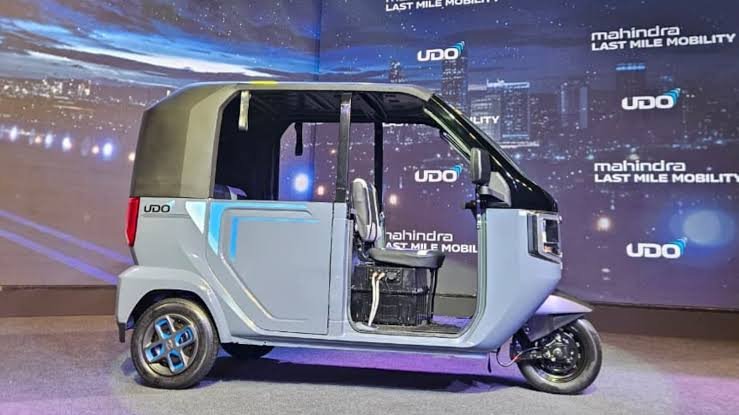
Mahindra Last Mile Mobility has held the electric three-wheeler market leadership position for four consecutive years, producing passenger models including the Treo, Treo Plus, and E-Alfa Plus alongside cargo variants like the e-Alfa Cargo, Zor Grand, and Treo Zor. The Treo runs on a 7.4 kWh lithium-ion battery delivering an ARAI-certified 110 km range, while the Treo Plus’s larger 10.24 kWh battery extends that to 150 km, and the company has partnered with Vidyut to roll out battery-subscription financing leveraging its all-India service footprint.
That combination of engineering breadth, spanning both passenger and cargo applications across multiple payload and range configurations, plus a genuinely extensive nationwide dealership and financing network, is precisely why Mahindra has maintained pole position even as Bajaj Auto’s growth trajectory has accelerated sharply, from just 2% market share in FY2024 to 11% in FY2026.
2. Bajaj Auto
Bajaj Auto’s electric three-wheeler market share climbed from 2% in FY2024 to 7% in FY2025 and reached 11% in FY2026, with the company scaling output on its Chakan production line and offering both passenger and cargo electric three-wheeler variants. In April 2025 specifically, Bajaj sold 5,509 units, up 330% year-on-year, trailing market leader Mahindra by just 131 units and matching its 9% monthly share, reflecting genuinely rapid share gains rather than gradual incremental growth.
Bajaj’s established OEM quality systems and extensive parts and service network resonate particularly strongly with risk-averse commercial buyers who prioritise long-term reliability and resale value over upfront price, the same brand trust dynamic that has made Bajaj India’s largest overall three-wheeler manufacturer, with 36.3% total three-wheeler market share across all powertrains, before it even entered the electric segment aggressively.
3. YC Electric Vehicle
YC Electric, the longstanding No. 2 e-three-wheeler OEM before losing that rank to a hard-charging Bajaj Auto in FY2024, sold 4,465 units in April 2025, up 15% year-on-year, and closed FY2026 having opened the fiscal year with 1,207 units in April 2025 and finished at 2,885 units in March 2026, crossing 2,200 monthly units nine times during the year. The company produces its Yatri line on a mild steel tube chassis with a brushless DC motor, competing specifically through price-aggressive models that resonate with rural and Tier-III market segments.
That rural and Tier-III positioning genuinely differentiates YC Electric’s growth strategy from Mahindra’s and Bajaj’s more nationally distributed approach, letting it maintain relevance in price-sensitive markets even as legacy OEMs increasingly target the same volume e-rickshaw segment with better-built, safer products.
4. TVS Motor Company
TVS Motor has emerged as a genuinely credible contender for the industry’s No. 3 position, having grabbed a 2% e-three-wheeler market share in a single month during 2025 and continuing to accelerate its electric three-wheeler sales at a faster rate than several established e-rickshaw specialists. Industry analysts specifically flag the ongoing battle between Mahindra Last Mile Mobility and Bajaj Auto for market leadership as likely to continue through FY2027, with TVS positioned as the new challenger for the third spot previously held by YC Electric.
TVS’s rapid entry into this ranking reflects the same pattern seen across India’s broader electric two-wheeler market, where established, well-capitalised automakers with existing dealer and service infrastructure are increasingly displacing smaller, specialist EV manufacturers across adjacent electric vehicle categories.
5. Saera Electric Auto (Mayuri)
Saera Electric Auto, the Rajasthan-based manufacturer of the nine-model Mayuri brand of electric rickshaws, sold 22,845 units in FY2026, down 19% year-on-year from 28,229 units in FY2025 and 30,127 units in FY2024, with its e-3W market share falling from 5% in FY2024 to just 3% in FY2026. That declining trajectory, despite remaining the fifth-largest player on the e-3W leaderboard, illustrates the genuine competitive pressure legacy e-rickshaw specialists are facing as Bajaj, Mahindra, and TVS expand their combined footprint into the same volume segment.
Saera’s continued fifth-place ranking despite this share erosion reflects the brand’s established base of Mayuri-loyal fleet operators, though its year-over-year volume decline of over 5,000 units signals genuine vulnerability to further share loss if legacy OEMs continue pricing competitively within the entry-level e-rickshaw category.
6. Piaggio Vehicles
Piaggio Vehicles sells the battery-operated Ape E-City passenger rickshaw and Ape E-Xtra cargo tempo, carrying forward its iconic internal-combustion Ape legacy into the battery-powered era with high-torque motors and fast battery-charging infrastructure designed to minimise passenger waiting time. In April 2025, Piaggio unveiled a battery subscription programme for its Apé Elektrik range, covering up to 150,000 km under an 8-year term, directly addressing upfront cost concerns that keep price-sensitive fleet operators from committing to electric variants.
That subscription-based financing innovation reflects a genuine industry-wide shift toward reducing total cost of ownership friction, a strategy Piaggio is pursuing in parallel with Mahindra’s own battery-subscription tie-up with Vidyut, both companies recognising that upfront battery cost remains the single biggest barrier to e-rickshaw adoption among individual owner-drivers.
7. Euler Motors
Euler Motors, a domestic challenger specialising specifically in cargo applications, develops the HiLoad EV rated for 688 kg of payload and 88.55 Nm of torque, partnering directly with e-commerce fleets to validate total-cost-of-ownership claims through data dashboards tracking real-world performance. That data-driven, fleet-partnership approach genuinely differentiates Euler from passenger-focused competitors, positioning it specifically to capture India’s growing last-mile logistics and e-commerce delivery demand rather than competing in the more crowded passenger rickshaw segment.
8. Dilli Electric Auto
Dilli Electric Auto’s e-3W market share fell to 2.60% in FY2026, down from 4% just two years earlier, manufacturing electric rickshaws under its CityLife brand available in a limited set of states including Uttar Pradesh, Bihar, Jammu & Kashmir, Delhi, and Bengal. That declining share reflects the same competitive squeeze affecting Saera and YC Electric, as legacy players with better-built, safer products increasingly target the volume e-rickshaw segment Dilli Electric has traditionally served.
9. Kinetic Green Energy & Power Solutions
Kinetic Green brings decades of two-wheeler manufacturing heritage from the broader Kinetic Group into electric three-wheeler manufacturing, recognised consistently among the established major players tracked in India’s e-rickshaw market alongside Terra Motors and Piaggio Vehicles. The company’s continued positioning within this competitive landscape reflects genuine legacy brand credibility, even as it competes against considerably larger-scale entrants like Mahindra and Bajaj for the same passenger and cargo e-rickshaw demand.
10. Terra Motors India Corp
Terra Motors India stands among the established major companies operating in India’s electric rickshaw market, offering both passenger and cargo electric rickshaw variants and recognised consistently alongside Mahindra Electric Mobility and Piaggio Vehicles in industry market analyses. Its continued presence in this space, despite competing against increasingly aggressive legacy automaker expansion, reflects the genuine depth of India’s electric rickshaw manufacturing ecosystem beyond just the top three volume leaders.
Frequently Asked Questions
Q1. Which company currently leads India’s electric rickshaw and three-wheeler market?
A: Mahindra Last Mile Mobility has held the market leadership position for four consecutive years, though Bajaj Auto’s rapidly rising share, from 2% in FY2024 to 11% in FY2026, has made this the closest competitive battle at the top of the industry in years.
Q2. Why are legacy e-rickshaw specialists like Saera and Dilli Electric losing market share?
A: Both companies have seen their e-3W market share decline, Saera from 5% to 3% and Dilli Electric from 4% to 2.60% over two years, as legacy automotive OEMs like Bajaj, Mahindra, and TVS increasingly target the same volume e-rickshaw segment with better-built, safer products and stronger service networks.
Q3. What government incentives support electric rickshaw purchases in India?
A: The PM E-Drive scheme, valid from October 1, 2024 to March 31, 2026, offers e-rickshaw buyers a subsidy of ₹25,000 in the first year and ₹12,500 in the second year, while cargo e-three-wheelers (L5 category) receive ₹50,000 in the first year and ₹25,000 in the second, incentivising purchase of 320,000 commercial e-three-wheelers overall.
Q4. How is battery subscription financing changing e-rickshaw affordability?
A: Both Mahindra (through a Vidyut partnership) and Piaggio (with an 8-year, 150,000 km subscription plan for its Apé Elektrik range) have introduced battery-subscription models specifically to reduce the upfront cost barrier that has traditionally kept individual owner-drivers from committing to electric rickshaws over conventional CNG models.
Q5. What regulatory changes should e-rickshaw buyers watch for in 2026?
A: India’s draft policy direction points toward stronger safety controls, speed caps, and manufacturing audits beginning April 1, 2026, alongside tighter battery standards, changes expected to favour established manufacturers with robust quality systems, like Mahindra, Bajaj, and Piaggio, over smaller, price-focused entrants.